
Lovevery’s Slide & Seek Ball Run has a clever ending. Your toddler watches a ball wind down the spiral, then it disappears into the wooden box below. Now there’s something to figure out: where did it go, and which door will get it back?
Lovevery sells the Slide & Seek as part of The Babbler Play Kit, a collection for months 13–15. The kit costs $132 on Amazon and includes other toys and a board book alongside the ball run. If this is the one toy you came for, that’s a much bigger purchase than a standalone ball toy.
When your child opens a door to find the ball, they’re practicing an important developmental skill. Object permanence is the understanding that something still exists when you can’t see it. Looking behind a door gives your child a chance to use that understanding: remember the ball, look for it and bring it back. Releasing it at the top also lets them explore cause and effect through an action they can repeat.
So is the ball run a good reason to buy the whole collection, or would a cheaper toy give your child the part they’ll enjoy most? We compared Battat’s Pound & Roll and Hape’s Pound & Tap Bench to help you decide. Both cost much less; each offers a different reason to bring it home.
Our take
Battat is our first pick if you want an inexpensive ball toy. Hape is worth the extra for its removable xylophone. We’d choose Lovevery if your child loves finding hidden things and you also want the kit’s stacker, puzzle and posting toys. All three are available on Amazon.
The quick comparison
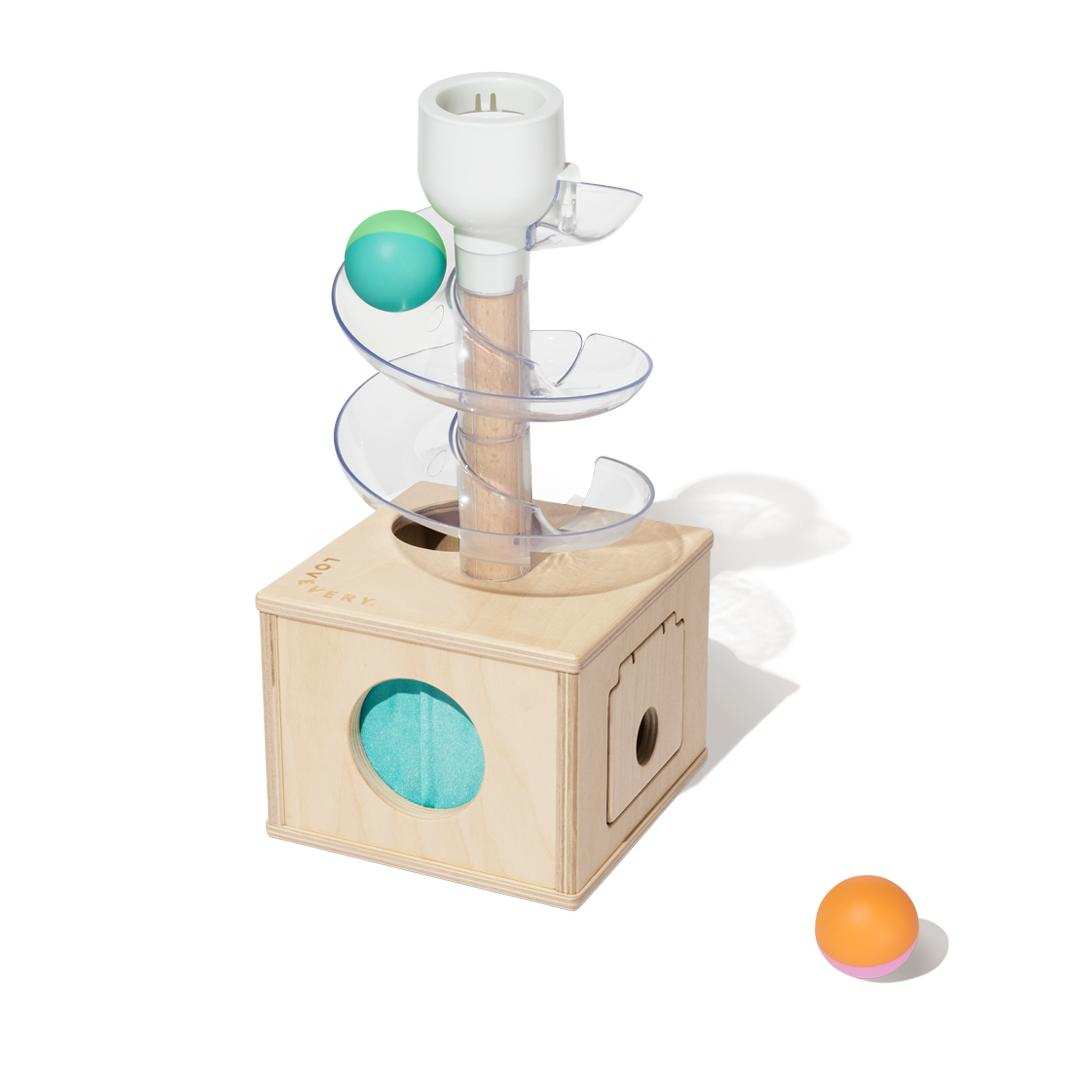
Lovevery Slide & Seek Ball Run
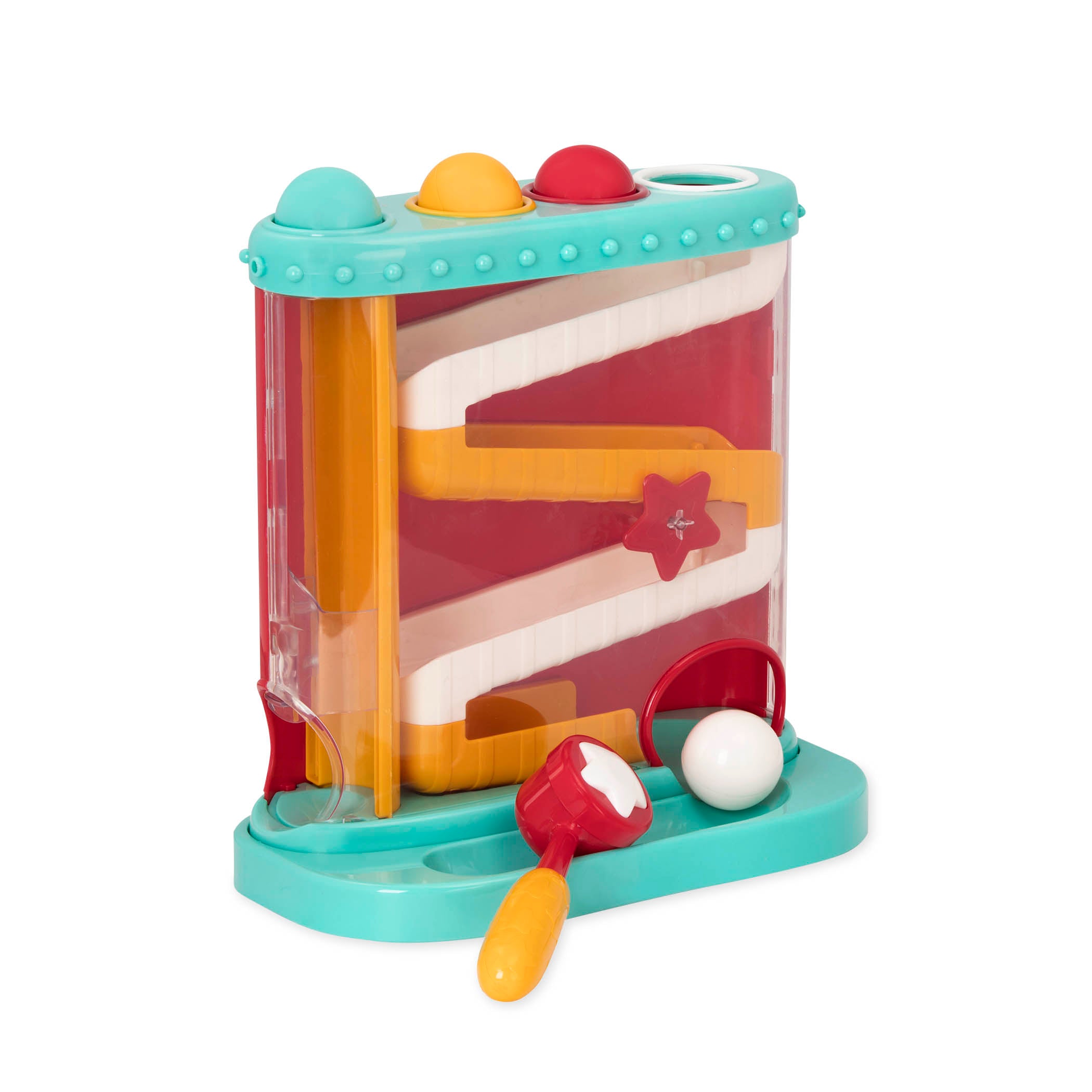
Battat Pound & Roll
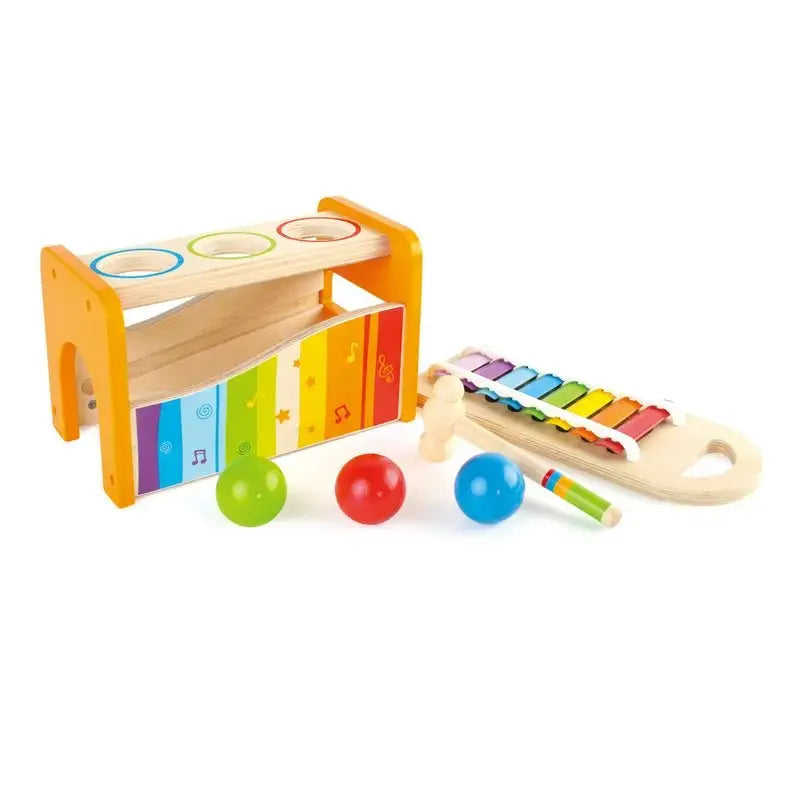
Hape Pound & Tap Bench
Lovevery Slide & Seek: when is The Babbler Kit worth it?
The spiral makes the ball’s journey easy to watch. The wooden base adds the interesting part: your child has to work out how to retrieve it. Opening the doors gives their hands something to solve after their eyes have followed the ball down.
That combination is Lovevery’s strongest selling point here. Battat and Hape both give a child a satisfying result to repeat, but neither has Lovevery’s hidden-ball search at the bottom. If the little doors are what caught your attention, they should count in your buying decision.
The Babbler Kit on Amazon also includes the Wooden Coin Bank with coin, carrot and posting lids, a wooden stacker, Circle of Friends Puzzle, Bunnies in a Felt Burrow, a board book and Play Guide. For a first birthday, that’s an appealing collection: several different things to try as your child gets interested in fitting, posting, stacking and finding.
We’d look at what’s already on your shelf. If you need a few good activities for this stage, the kit has a stronger case than its price beside one cheap ball toy suggests. If you already have a stacker, puzzles and plenty of posting toys, buying another collection for the ball run alone is a tougher sell.
Our take: Buy The Babbler Kit if you want the ball run’s hiding-and-finding play and several of its other toys. We’ve linked the complete kit below. For a child who mainly wants to send balls rolling, start with Battat.
1. Battat Pound & Roll: our budget pick
For $12.01, Battat gets a lot of the fun onto the floor without a big purchase. Your child puts the balls in the openings at the top, gives them a whack with the mallet and watches them work their way down the maze. The clear front keeps the action visible, and the little red spinner adds something else to watch along the way.
The mallet gives this toy a different appeal from Lovevery. A child who wants to bang, experiment and see an immediate result has a good reason to come back to it. Aiming at a ball takes some hand-eye coordination, and each successful hit produces a result they can connect with their own action.
Battat also lets you remove the base so the balls roll out across the floor. Keep it attached when you want them gathered together; take it off when chasing the balls is part of the fun. The pieces store inside when you’re finished.
There’s no door puzzle at the end. We’d buy it for the pounding and rolling, with a very welcome saving of about $120 compared with the whole Babbler Kit.
Our take: This is where we’d start for an inexpensive ball toy from one year. It makes particular sense when the rest of your toy shelf is already well covered.
2. Hape Pound & Tap Bench: for little music makers
Hape gives the falling balls a soundtrack. Pound a ball through the bench and it lands on the xylophone below, making notes as it rolls. If your toddler is delighted by the noise their own actions can make, that’s a good reason to spend more than the Battat price.
The xylophone slides out, so your child can tap the bars directly with the mallet, too. That gives you two ways to play: send balls onto the keys or explore the sounds one bar at a time. The immediate sound makes cause and effect easy to notice, and trying different bars offers an early opportunity to hear differences in pitch.
At $32.53, we’d choose Hape for a child who enjoys both banging and musical play. It has a much shorter ball journey than Lovevery or Battat, so the music needs to be part of the attraction. It doesn’t offer Lovevery’s hidden compartment and retrieval doors.
Our take: Pay the extra over Battat when you want the removable xylophone as well as a pounding toy. For watching a ball travel down a longer route, Battat is the better fit.
Which would we buy?
Battat for a small purchase with plenty to do. Hape for pounding and music together. Lovevery for hiding, finding and a broader first-birthday collection.
Our first standalone pick is Battat. The Babbler Kit becomes more tempting when you want its other activities, especially the interchangeable posting box. You’re paying for a collection, so choose it because you want the collection.
For a simpler ball-in, ball-out activity, see our Lovevery Ball Drop Box comparison. Our Lovevery buyers guide covers ten popular products and the alternatives we’d consider.