Development

Understand your child’s development. Know what to do next.

You spend a lot of time watching your child figure things out. Reaching for something just beyond their fingers. Turning a book around. Insisting on holding the spoon, even when very little of the food makes it to their mouth.

You can see them learning. The harder part is knowing what to make of it.

What are they working on? What could you help them try? And when you search for activities for their age, which ones actually make sense for the child sitting in front of you?

That’s where Flourish starts. With what your child is showing you, across five areas of development, and practical ideas for what to do together to help them continue to flourish.

Five areas help you see the whole picture

Walking and first words tend to get the attention. There’s also a lot happening in how your child uses their hands, responds to new experiences, plays with you, and joins in with everyday routines.

Flourish organizes that picture into five development areas. Each gives you a different way to understand what your child is exploring.

Movement

How your child uses their body to explore.

Rolling, sitting, crawling, standing, and walking are the familiar milestones. Movement also includes the balance and coordination involved in getting around and changing position.

This is the area to explore when you’re wondering how to give your child more opportunities to move, what they’re building toward, or how to make play fit what they can do today.

Flourish’s Movement activities bring those opportunities into everyday play, with suggestions matched to your child’s starting point.

Fine Motor

How your child uses their hands and fingers.

Picking up a toy, letting it go where they intended, turning a page, and working out how two pieces fit together all involve hand skills. Those same skills show up beyond the toy basket, in eating, dressing, and other daily tasks.

A toy can be a good fit for one child and frustrating for another, even when both children are the age printed on the box. Understanding what the activity asks their hands to do helps you choose more thoughtfully.

Fine Motor is where we explore those differences and offer practical ways to practice.

Communication & Play

How your child connects, expresses themselves, and explores ideas.

There’s plenty to notice before a first word. A look, a sound, a gesture, or an invitation to play can tell you something about how your child is communicating.

Play gives you opportunities to respond, take turns, imitate each other, and share an interest. Sometimes the most useful thing you can do is pause long enough to see what your child wants to contribute.

This area brings communication and play together, with activities that give both of you a way into the exchange.

Sensory & Regulation

How your child experiences the world and finds their footing in it.

You may have a child who heads straight for the mud or one who wants their hands wiped immediately. A busy room might be exciting on one day and a lot to take in on another.

Paying attention to those responses helps you make better choices about an experience: how to introduce it, what to adjust, and when a different approach would fit better.

Flourish includes sensory feedback so these observations can inform activity recommendations. This area also explores regulation and the support children need as they navigate excitement, frustration, and unfamiliar situations.

Independence

How your child takes part in everyday life.

There comes a point when helping with the task becomes more interesting than watching you do it. Holding the spoon. Offering a foot for a shoe. Trying to pull something on without quite having the plan worked out.

Independence involves finding a part your child can participate in, with enough help to make it possible.

Flourish brings these opportunities into focus through everyday routines. They’re especially useful when your child is determined to help and you’re trying to work out what to hand over.

Where is your child starting?

Knowing about the five areas is useful. Understanding how they relate to your own child is what makes the information actionable.

Your child might be eager to move and climb while still working out how to handle smaller toys. They might communicate a great deal through gestures while spoken words are emerging. One broad age label leaves a lot of that detail out.

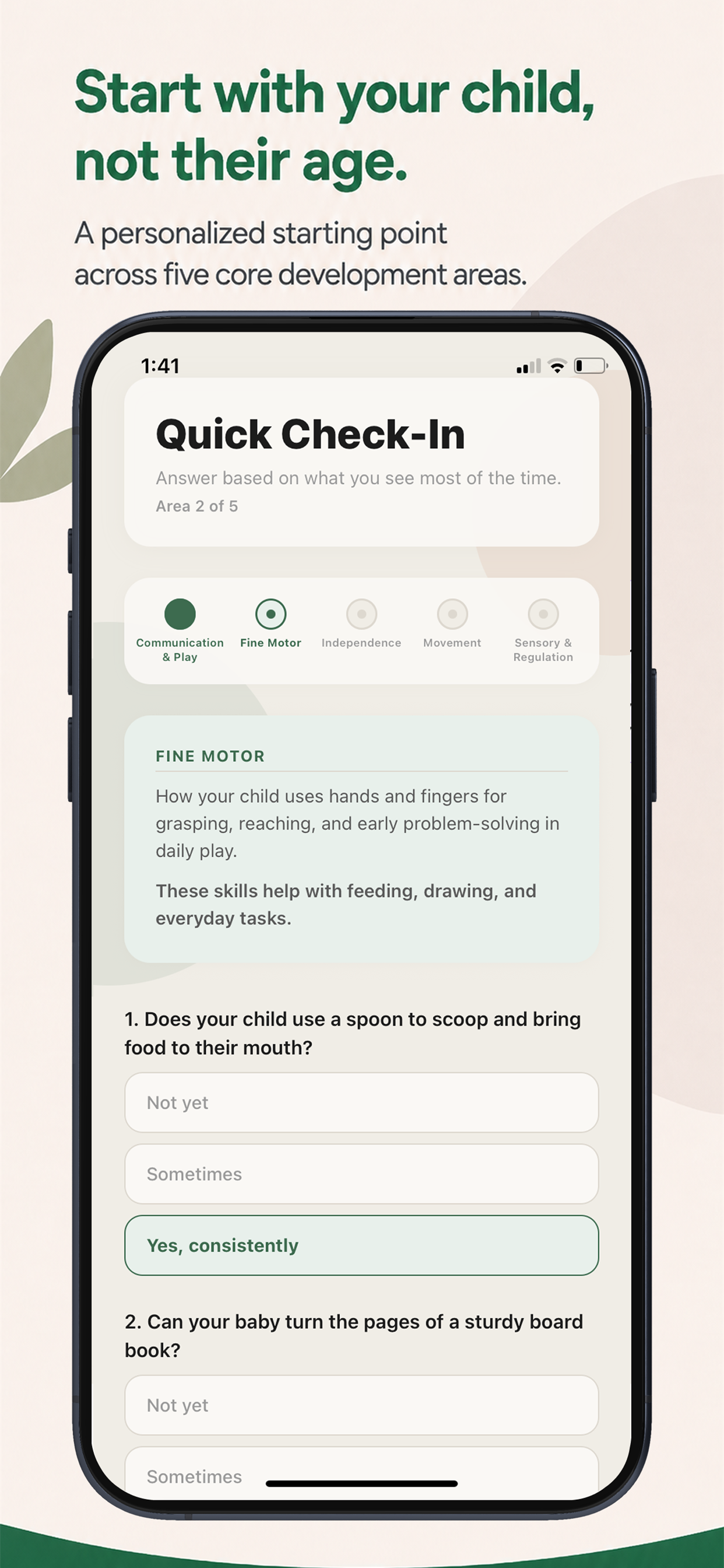
Flourish’s onboarding check-in asks about things you can observe across all five areas. Your answers establish a personalized starting point for each one, helping the app choose relevant Daily Activities.

You bring the knowledge that comes from spending time with your child. Flourish gives you questions that help organize it and a practical way to use what you’ve noticed.

That starting point is the beginning of the guidance. It helps answer the question that comes next: what should we try today?

Get Flourish for iPhone
Flourish’s onboarding check-in showing parent observations used to establish a personalized starting point
Flourish app

You have a part in this

Talking with your baby, responding to a gesture, sharing a book, and giving them room to explore are meaningful ways to support their development. Those back-and-forth exchanges with you help build early communication and social skills. Harvard’s Center on the Developing Child explains why these interactions matter.

The useful question is how to build on what’s already happening.

If your child keeps handing you a toy, there’s an opening for shared play. If they want to do more of the dressing themselves, you can find a manageable part for them to try. Their interests give you somewhere to begin.

Flourish helps you notice those openings and turn them into things you can do. The aim is to make the time you already spend together more useful, more interesting, and easier to feel confident about.

From a starting point to something you can do today

Finding an interesting activity once is useful. Continuing to find relevant ideas as your child grows takes more thought.

Flourish brings that work into one place.

After the check-in, the app recommends Daily Activities across the five development areas. You can see what to do, swap an activity that doesn’t fit, and share feedback afterward. Activity feedback and benchmark check-ins help keep the guidance aligned with what your child is showing you.

There’s room for the practical realities here. An activity may be a good fit, but the timing is terrible. Your child may enjoy one idea repeatedly and have very little interest in another. Being able to adjust is part of making guidance useful at home.

Flourish was created with Bekki, a pediatric occupational therapist and toddler mom, to help parents make these choices with more understanding and less searching.

What about activities for their age?

Age is a perfectly reasonable place to start looking. “Activities for a nine-month-old” is a useful question when you’re trying to find something to do this afternoon.

Age-based milestone information can also help you understand what to watch for as your child grows. The CDC’s milestone resources organize observations by age.

When it comes to choosing an activity, take the next step and look at what it involves. Does your child have a way to participate? What are they already interested in? Would a different setup make it more accessible?

That’s the thinking behind Flourish. Age provides context; observations help make the choice more personal.