
Independence

Everyday independence skills for babies and toddlers

Finding their part in everyday life

You’re trying to get out the door. Your child is trying to put on their own shoe. You have slightly different ideas about how long this should take.

That determination is worth making room for. So is the quieter participation: pushing an arm through a sleeve, reaching for the spoon, or bringing you the towel before you ask.

Flourish helps you recognize what your child is ready to take on and find manageable ways to practice together.

Independence includes the everyday abilities that help your child participate in feeding, dressing, washing, and familiar routines. It grows as they learn to do more for themselves, with your support along the way.

What is your child beginning to do?

A whole routine can contain several different challenges. Getting dressed involves knowing what comes next, finding the right opening, balancing, pulling, and managing fabric.

Your child may be ready for one part well before they can handle the whole job.

They push an arm through a sleeve
Taking an active part in dressing
They pull at a loose sock or hat
Beginning to manage clothing
They bring a loaded spoon toward their mouth
Taking more of a role at mealtimes
They hold out their hands or reach for the towel
Joining in a familiar care routine
They put clothing or toys into a basket
Helping with an everyday job
They bring their shoes when it’s time to leave
Recognizing what comes next

For babies, these routines begin with you responding and making everyday care familiar. You can describe what you’re doing during a change or pause to notice their response.

As your child starts joining in, look for the part they’re already attempting. That’s often the most useful place to begin.

Four ways to practice together

These examples come from activities in Flourish. Choose a starting point that fits your child’s current abilities, and stay nearby to help.

Hand over a spoon they can use

At a meal, offer your child a suitable spoon loaded with a small amount of familiar food they already manage comfortably.

Let them bring it toward their mouth. Loading the spoon and using it are separate challenges; you can help with one while they practice the other.

Keep them seated upright and supervise throughout. Give them time, follow their appetite, and expect some food to miss its destination.

If they’re managing the loaded spoon comfortably, offer a turn at scooping. If it’s frustrating, help with the setup and keep their part manageable.

From Flourish: Spoon Loading and Handing Over.
Let them finish taking a sock off

Sit your child securely and pull a loose sock partway off, leaving the end for them to grasp.

Give them a moment to pull it the rest of the way. You’ve handled the awkward beginning; they get to finish a real part of getting undressed.

If it’s difficult to grip, loosen it a little more. As they become more confident, leave more of the job for them.

This is an easy opportunity to revisit when socks are coming off anyway. No extra setup required.

From Flourish: Shoe and Sock Off.

Give them a part in washing their hands

Help your child reach the sink securely, check the water temperature, and stay beside them.

Work through the routine together: wet hands, add soap, scrub for at least 20 seconds, rinse, and dry.

Let them take on the parts they can manage. They might rub their hands together, rinse with your help, or take the towel and begin drying.

Keep the sequence familiar. As they learn it, pause before doing the next step for them and see whether they’re ready to join in.

From Flourish: Hand Wash Routine.

Invite them into the laundry

Put a basket beside you and offer a clean, lightweight item to put inside.

Show them where it goes, then give them a turn. A washcloth or small shirt is easier to manage than a large towel.

If they enjoy the job, offer another item. A child who’s ready for more might help sort familiar clothes or try folding a washcloth with you.

Keep this a clothes-and-basket activity, with detergents and laundry machines out of reach.

From Flourish: Laundry Helper.

Find a part they can finish

“Get dressed” is a big instruction. “Pull your sock off” gives your child a clear job.

You can make the task easier without taking it over. Open the shoe before handing it over. Hold the sleeve where they can find it. Put the basket close enough that they can place something inside.

Then wait long enough to see what they do.

Finishing one part gives your child a chance to experience their own effort working. It also shows you where a little more help, or a different setup, would be useful next time.

Make room for practice in real life

Some mornings, you have time for the shoe experiment. Other mornings, everyone needs to be in the car.

Choose a routine where you can leave a little room for trying. Taking clothes off before a bath may be easier to slow down than getting dressed before daycare.

Offer simple choices when they fit: this shirt or that one, the blue cup or the green cup. You decide what’s available; your child gets a meaningful part in what happens.

When frustration takes over, help them through the difficult part. You can offer another turn later. The opportunity is in returning to these ordinary jobs as their abilities grow.

Where is your child starting?

Your child might feed themselves confidently while needing plenty of help getting dressed. They might know the handwashing routine but still find the soap dispenser impossible to press.

One age label leaves out those details.

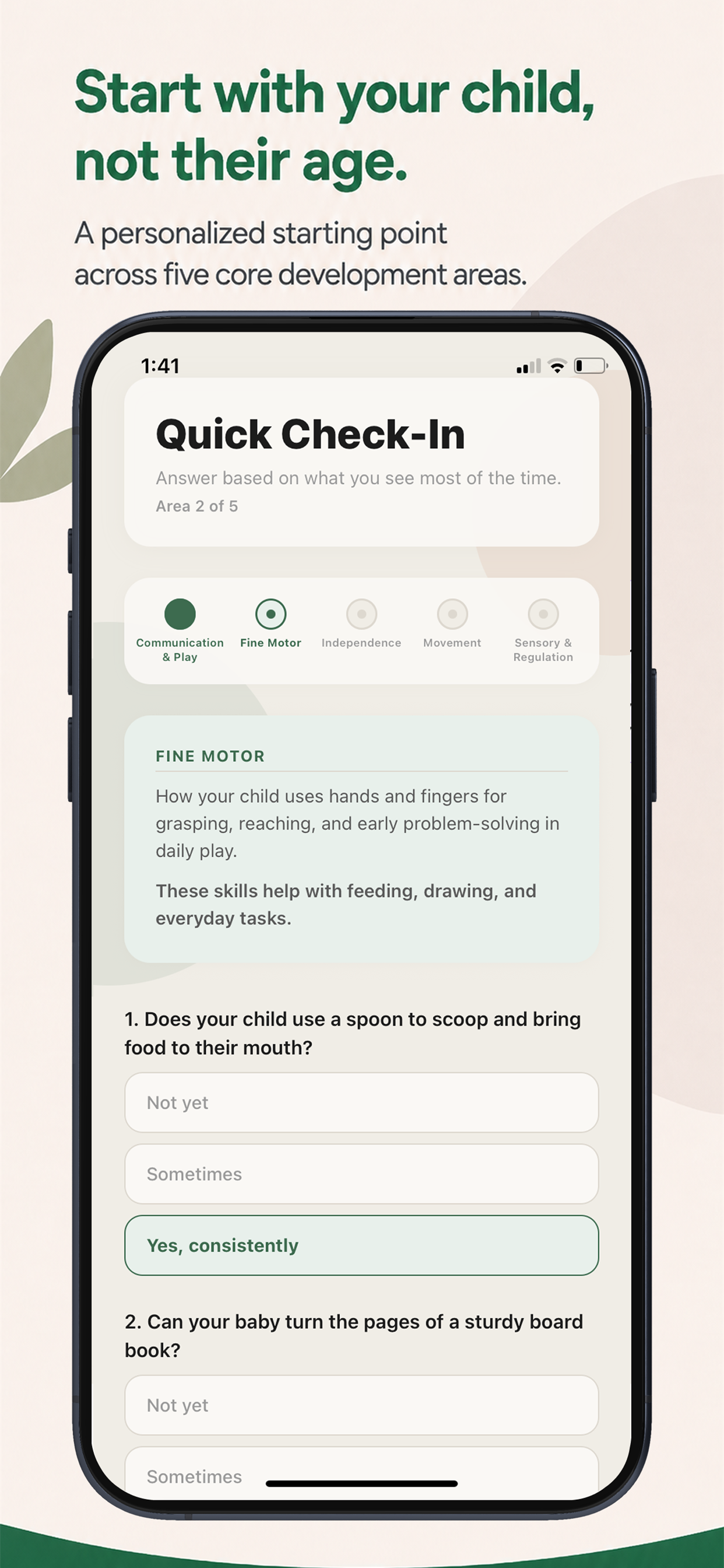
Flourish’s onboarding check-in asks about what you see across all five development areas. In Independence, that includes participation in meals, dressing, care routines, and everyday jobs.

Your answers help establish a starting point for this area separately from the others, so Daily Activities can meet your child where they are.

Flourish onboarding check-in establishing an individual starting point across five development areas
Flourish app

Keep everyday practice moving forward

Flourish recommends Daily Activities based on your child’s starting point, with clear instructions and options for adjusting the challenge.

One-touch activity feedback and regular benchmark check-ins help keep the guidance connected to what your child is showing you.

You can record activities and everyday firsts along the way. The first time they pull off their own sock may not make the baby book, but it belongs in the story of what they’re learning.

Independence is one part of that story. Flourish brings it together with the other four development areas, helping you understand what you’re seeing and know what to try next.

Get personalized Daily Activities in Flourish

If your child loses an everyday ability they previously had, or you’re concerned about feeding or self-care, bring those observations to their pediatrician.

Sources and further reading