
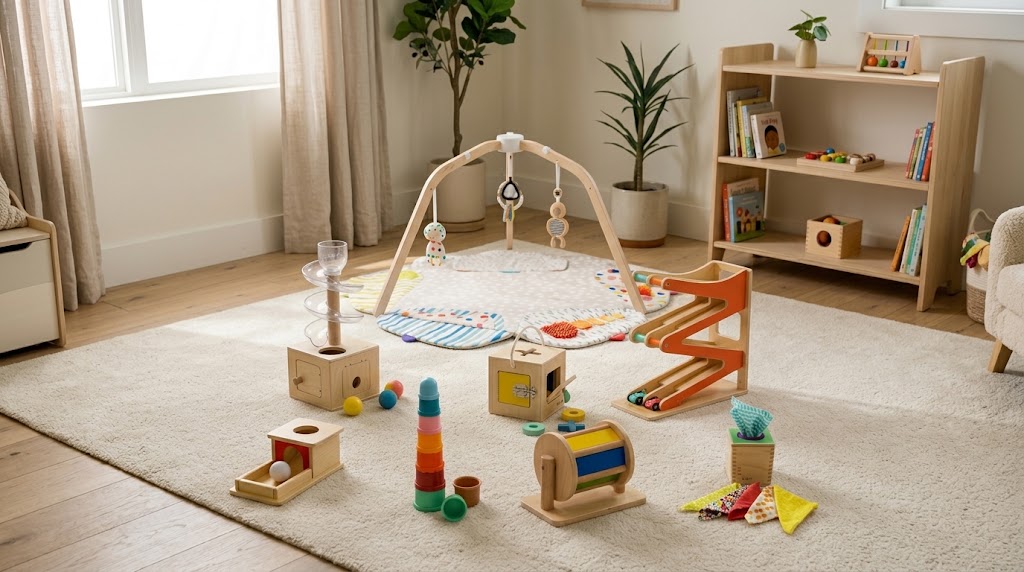
We love Lovevery. We also understand why parents spend so much time looking for cheaper alternatives.
The toys are thoughtfully designed, they look great, and many of them do a wonderful job of keeping little hands and minds busy. But they’re expensive, especially when the toy you’re interested in is part of a much larger Play Kit.
And here’s the thing: sometimes Lovevery really does make the better product. Other times, you can get nearly the same experience for a fraction of the price.
We’ve bought several Lovevery toys for our daughter, and some have become household favorites. Others are based on ideas that have been around in Montessori classrooms and children’s playrooms for decades. Lovevery doesn’t necessarily have a monopoly on good developmental play.
So we looked at ten popular Lovevery toys and found affordable alternatives worth considering. We’re comparing what matters: how the toys work, what makes them interesting to children, what you’re giving up with the cheaper option, and whether the extra money seems justified.
We’re not going to call something a great dupe just because it looks similar in a photograph.
The quick comparison
Choose a toy to jump to its full comparison.
| Lovevery toy | Affordable alternative | Approx. listed price | Developmental goal | Our verdict |
|---|---|---|---|---|
| Play Gym | IKEA GULLIGAST | $49.99 | Reaching, visual tracking, exploring movement, and early hand coordination. | Partial alternative |
| Block Set | Hape Build Up and Away | $49.99 | Grasping, stacking, spatial relationships, planning, and experimentation. | Partial alternative |
| Slide & Seek Ball Run | Battat Pound & Roll | $11.84 | Cause and effect, visual tracking, object permanence, and problem-solving. | No convincing dupe found |
| Lockbox | KiwiCo Play-and-Go Lockbox | $32.99 | Hand coordination, problem-solving, opening and closing, and object exploration. | Strong dupe |
| Ball Drop Box | Thinkamajigs Object Permanence Box with Tray | CAD $28.95 | Purposeful releasing, hand-eye coordination, cause and effect, and emerging object permanence. | Strong dupe (functional match) |
| Spinning Rainbow | Nienhuis Spinning Drum | $36.70 | Coordinated reaching, visual tracking, hand control, and cause and effect. | Strong dupe (functional match) |
| Stacking Cups | IKEA UPPSTÅ | $2.99 | Grasping, stacking, spatial relationships, containment, and experimentation. | Strong dupe |
| Race & Chase Ramp | Joyfy Car Ramp | $18.99 | Cause and effect, visual tracking, experimenting with movement, and shared play. | No convincing dupe found |
| Carrot Box / Wooden Coin Bank | Montessori Toys Carrot Harvest Game (Walmart) | Varies | Fine motor coordination, aligning objects with openings, two-handed play, and early problem-solving. | Partial alternative |
| Magic Tissue Box | MindWare Sensory Sprouts | $27.99 | Grasping, pulling, sensory exploration, hand coordination, and putting objects in and out. | Partial alternative |
These are reference prices from our research, not guaranteed current offers. Some Lovevery toys are sold as part of Play Kits rather than individually, so we’re comparing the play experience, not claiming a specific dollar amount saved against an individual Lovevery retail price. Check current prices and manufacturer age guidance before purchasing.
Product links are ordinary retailer/manufacturer links, not affiliate links. Prices are in US dollars except Thinkamajigs, which lists Canadian dollars (CAD). Taxes, shipping, and currency conversion can affect the total. Age guidance shown in the sections below applies to the alternative product, not to a developmental milestone deadline.
1. Lovevery Play Gym vs. IKEA GULLIGAST
Verdict: Partial alternative
Manufacturer age guidance: all ages. IKEA says not to use this gym in a crib.
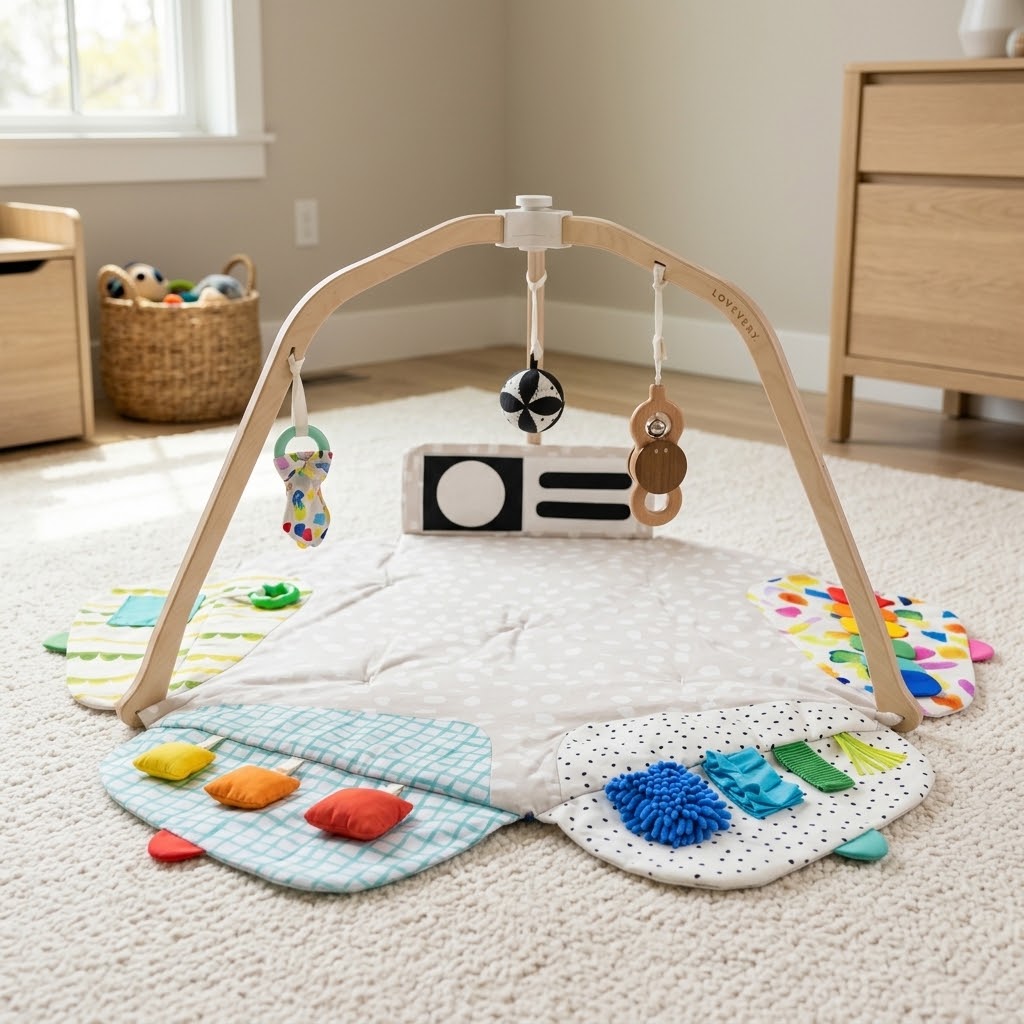
The Lovevery Play Gym was a daily staple in our house during our daughter’s early months, and looking back, it’s easily one of the best purchases we made for her.
We eventually added Lovevery’s Play Space Cover, turning the whole setup into what we called her “disco tent.” She would sit inside, completely mesmerized by everything around her. It was one of those rare baby purchases that we felt we really got our money’s worth out of.
That’s part of what makes the Lovevery gym special. It’s more than a mat with a few toys dangling overhead. There are different activity areas, accessories, and ways to use it as your baby grows. We found that versatility genuinely valuable.
But do you need all of that? Not necessarily.
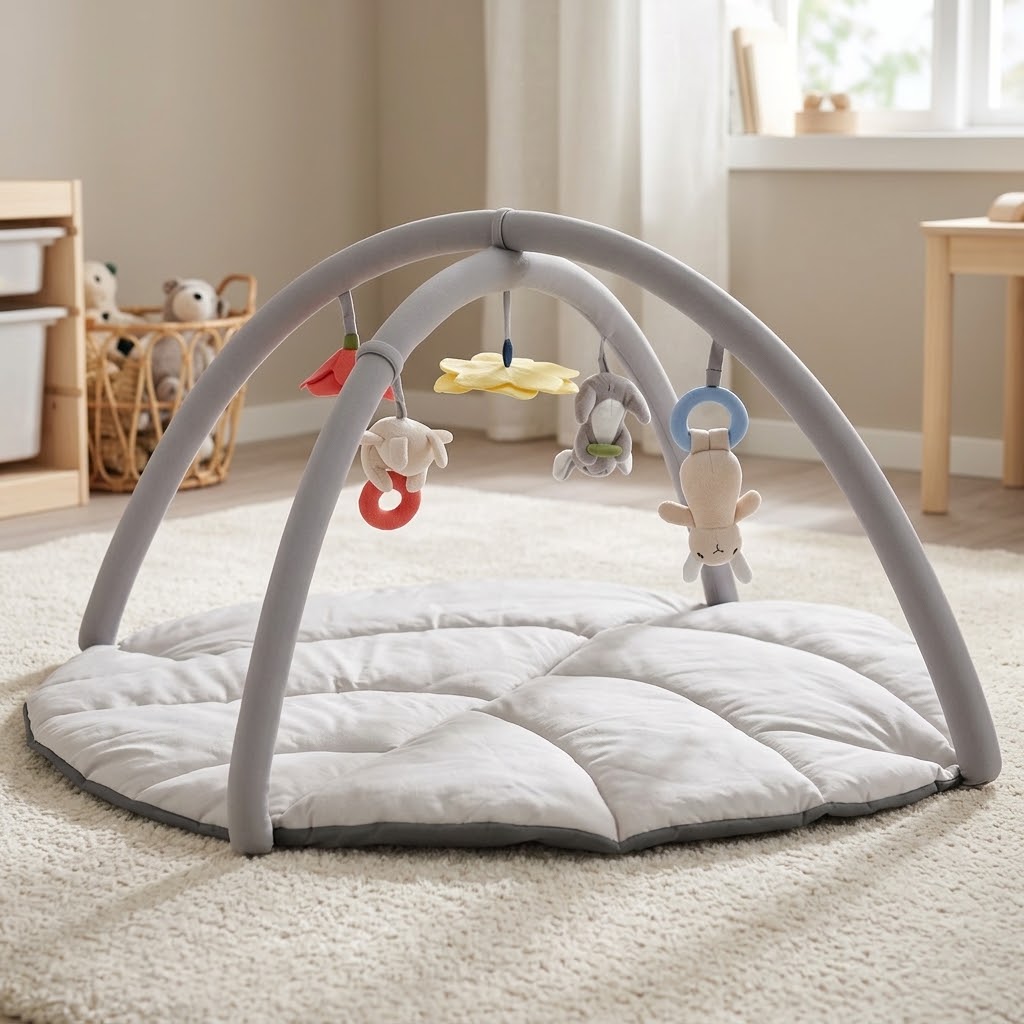
IKEA’s GULLIGAST baby gym covers the basics for about $50. It has hanging soft toys, a mirror, and different sounds and textures to investigate. If your main goal is giving your baby a comfortable place to look around, kick, reach, and eventually grab at toys, it checks a lot of boxes.
Where IKEA falls short is the broader play experience. Lovevery offers more variety in one setup, and the optional cover gave ours an entirely different life.
Our take: The GULLIGAST is a sensible buy if you’re watching your budget. But this is one case where we’d personally have a hard time giving up the original. We got enough use out of the Lovevery gym that the premium felt worthwhile.
Developmental focus: Reaching, visual tracking, hand-eye coordination, sensory exploration.
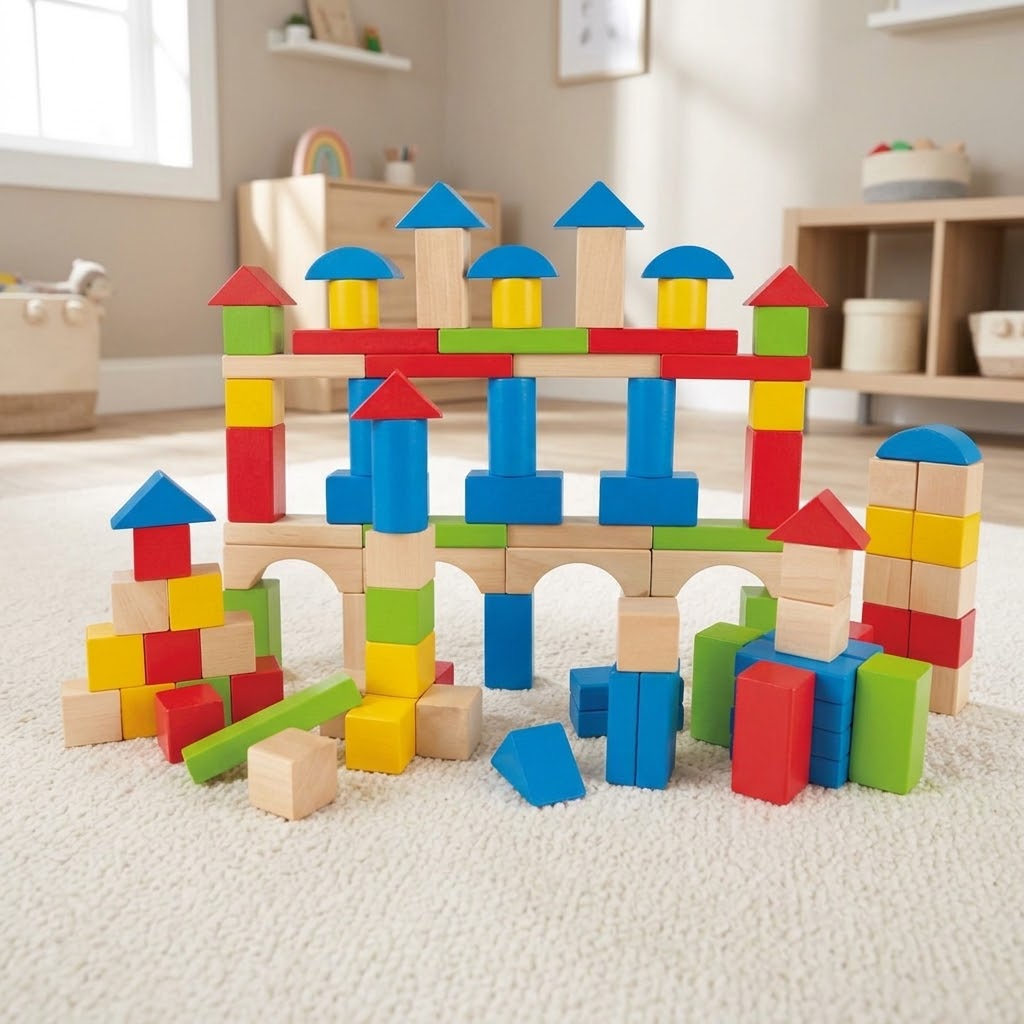
2. Lovevery Block Set vs. Hape Build Up and Away
Verdict: Partial alternative
Manufacturer age guidance: 12 months and older.
It’s hard to go wrong with a good set of wooden blocks.
There’s a reason they’ve been around forever. A young toddler might spend more time knocking down your towers than building their own. A little later, they’re figuring out how to balance pieces, make bridges, or build something that resembles a house.
Eventually, the same blocks can become roads, castles, garages, or whatever else your child dreams up. You don’t need elaborate instructions to get a lot of play out of them.
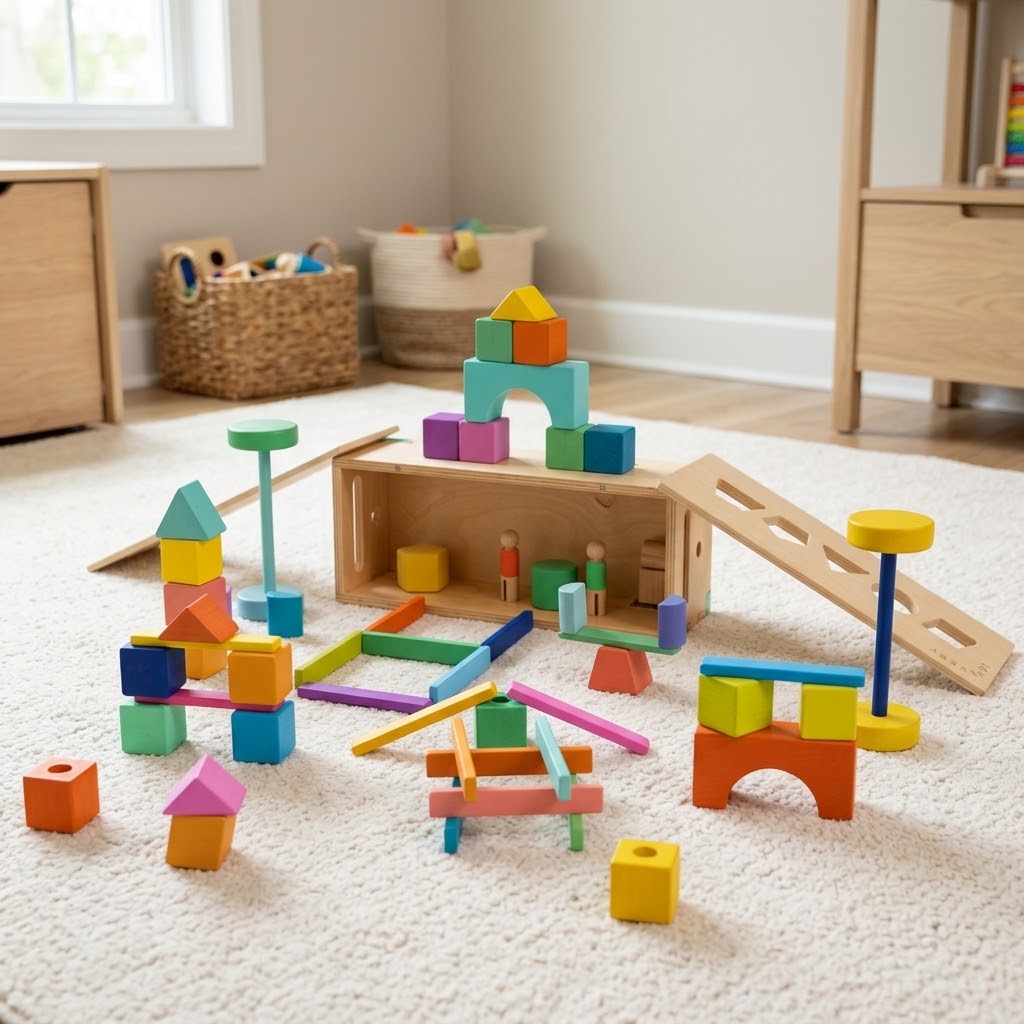
Lovevery’s Block Set takes the idea further. Along with traditional building pieces, it includes activities involving shape sorting, threading, ramps, and other ways to experiment with how objects fit and move. It’s closer to a small collection of toys than a basic block set.
Hape’s Build Up and Away blocks are a more straightforward option. You get wooden shapes for stacking, balancing, and building, without paying for all the extras.
And that’s not necessarily a bad trade.
For a child who mostly wants to build things and knock them over, traditional blocks can provide years of entertainment. Lovevery’s additional activities are clever, but they’re only worth paying for if you’ll actually use them.
Our take: Hape is a good alternative for the building portion of Lovevery’s set. Just know that you’re getting blocks, not a replacement for every activity packed into the original.
If you want to spend even less, IKEA’s UNDERHÅLLA wooden blocks are another option, with manufacturer guidance starting at 18 months.
Developmental focus: Fine motor control, spatial awareness, balance, problem-solving.
View the Hape Build Up and Away blocks
3. Lovevery Slide & Seek Ball Run vs. Battat Pound & Roll
Verdict: No convincing dupe found
Manufacturer/retailer age guidance: 12 months and older.
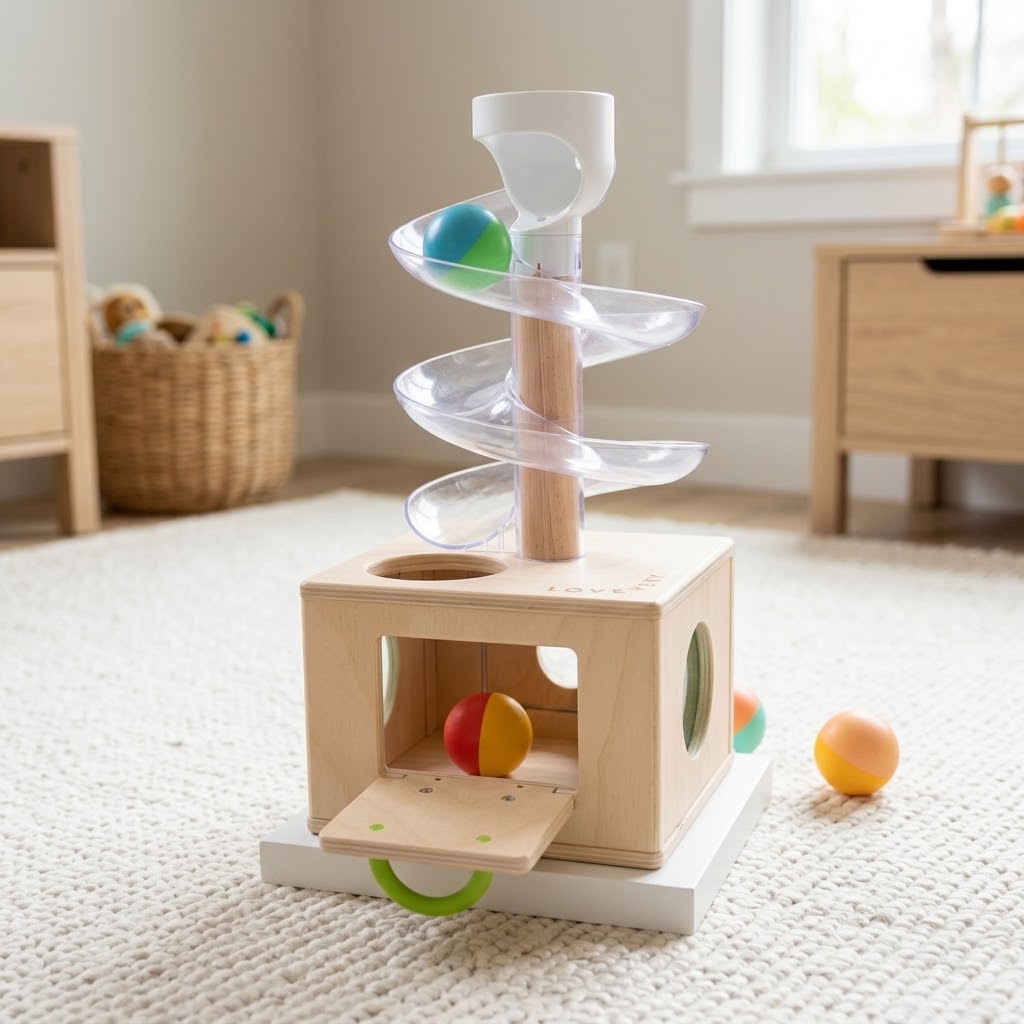
Ball runs are fun. You send a ball down a track, watch it move, and do it all over again. For young children who are beginning to understand cause and effect, that simple sequence can be endlessly entertaining.
But Lovevery’s Slide & Seek Ball Run has a particularly clever twist.
The ball doesn’t just roll through a track. It disappears behind little doors, giving your child something to search for. That’s where the toy becomes more interesting than an ordinary ball run.
Instead of simply watching what happens, your child gets to investigate where the ball went.
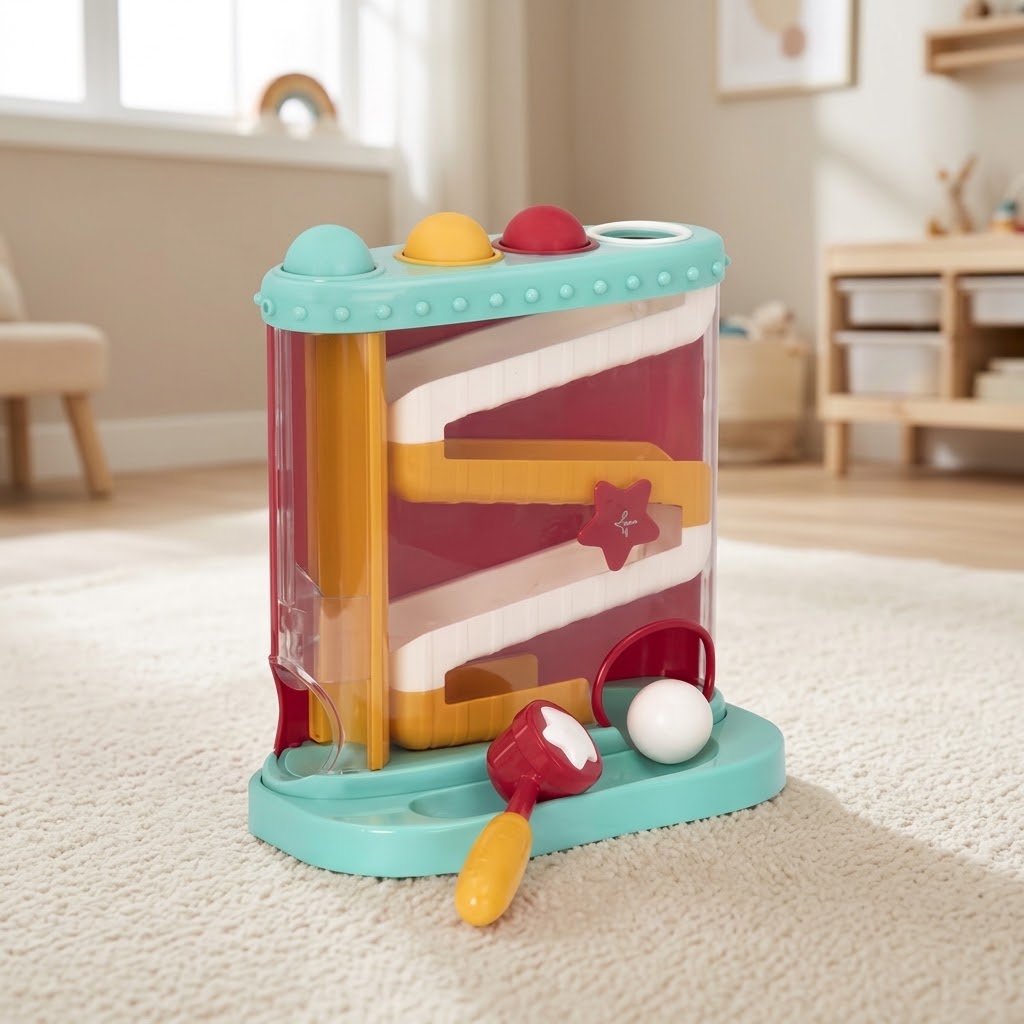
Battat’s Pound & Roll is an inexpensive alternative if you’re mainly interested in ball movement. Your child uses a mallet to knock balls through a colorful track and watches them roll through the different levels.
That’s a perfectly worthwhile activity, and the hammering introduces its own coordination challenge.
But it’s not really the same toy.
Battat focuses on hammering and watching balls roll. Lovevery combines the ball run with opening doors, searching, and retrieving hidden objects. That difference matters if the hide-and-seek element is what interests you.
You can also explore the same basic idea at home with a round of peekaboo or by hiding a favorite toy beneath a cloth and letting your child find it.
Our take: We’d happily consider the Battat toy on its own merits, especially at around $12. We just wouldn’t buy it expecting a true replacement for Lovevery’s Slide & Seek Ball Run.
Developmental focus: Cause and effect, visual tracking, object permanence, problem-solving.
Important safety note: Certain Lovevery Slide & Seek Ball Runs with wooden knobs were recalled by the CPSC on February 1, 2024 because the knobs could detach and create a choking hazard. If you own one, check the official recall notice to see whether yours is affected. Stop using an affected toy and follow Lovevery’s replacement instructions.
4. Lovevery Lockbox vs. KiwiCo Play-and-Go Lockbox
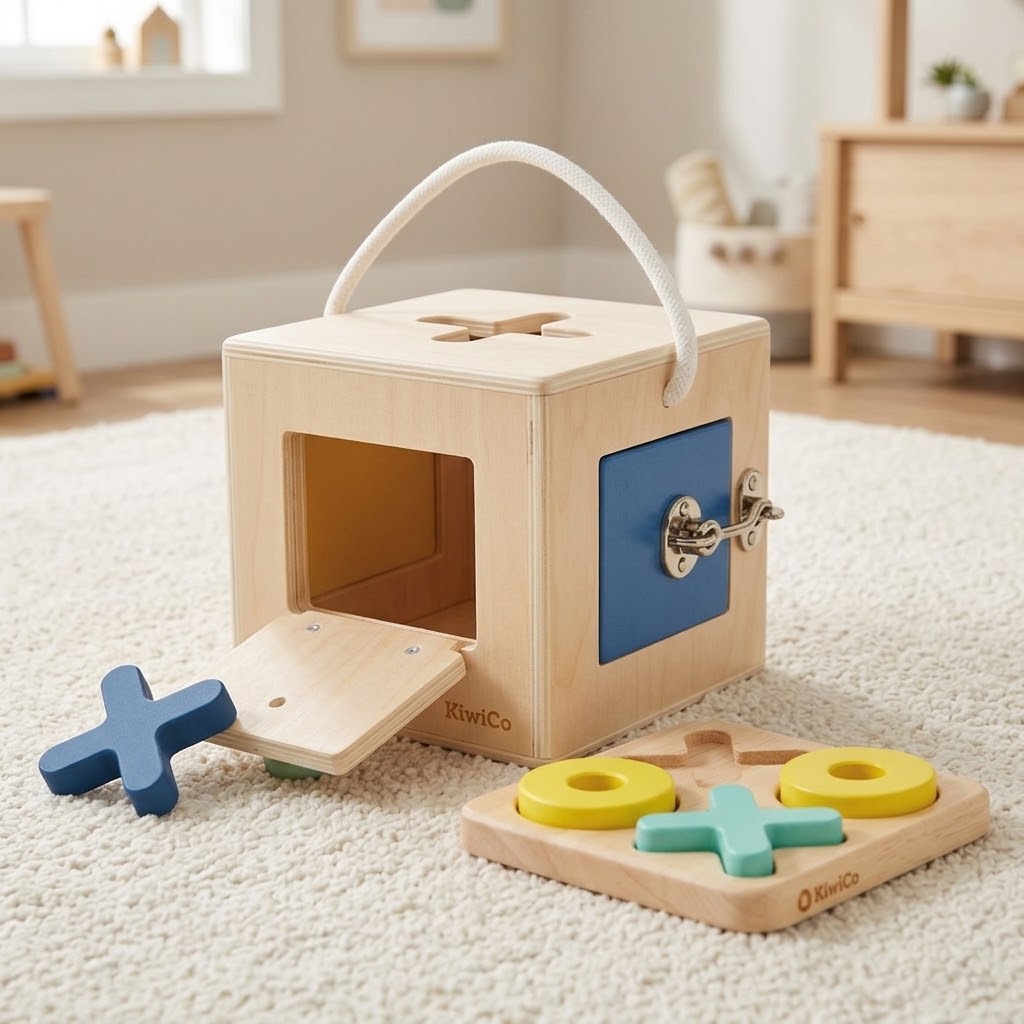
Verdict: Strong dupe
Retailer age guidance: 12 months and older.
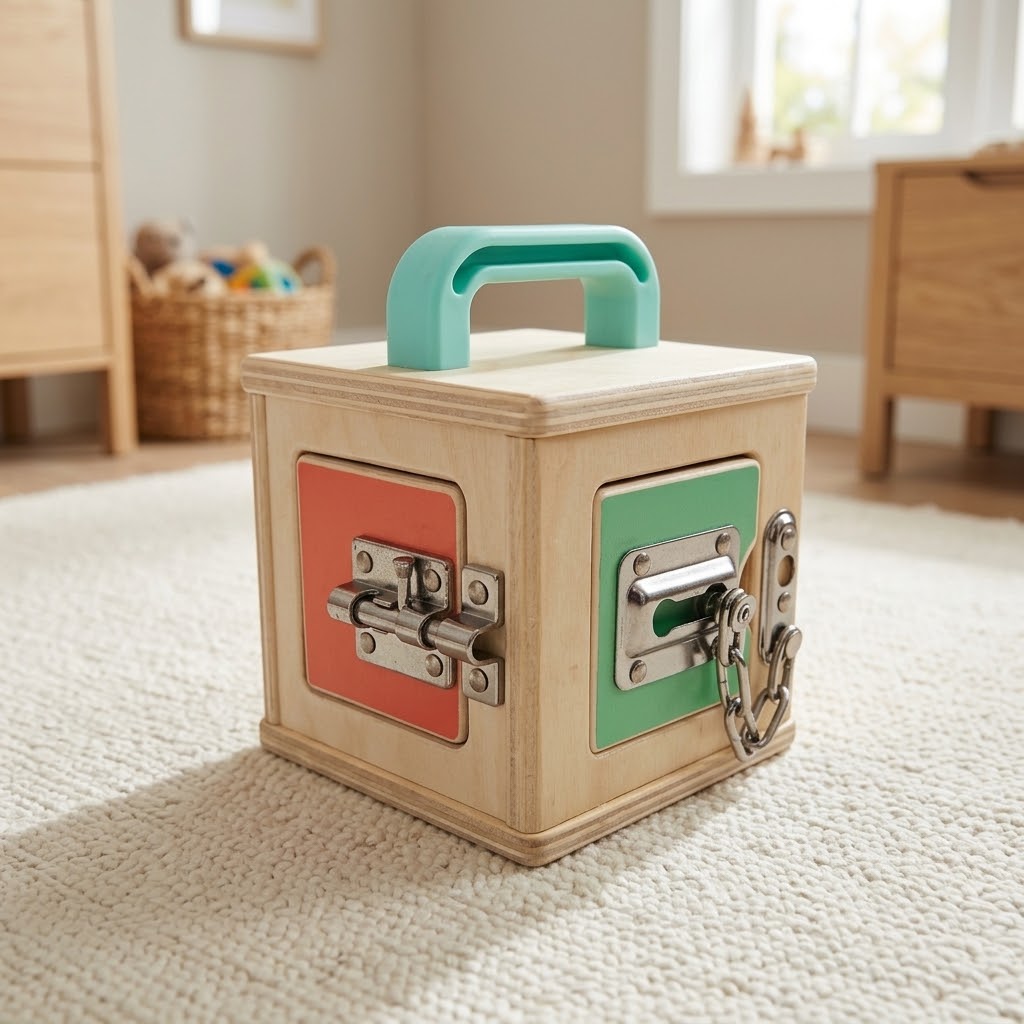
There’s something irresistible about a box with little doors and things hidden inside.
Lovevery’s Lockbox gives children several different latches to figure out. Some doors are easier to open than others, which is exactly what makes the toy interesting. Once your child gets the hang of one mechanism, there’s another one to investigate.
It’s a nice example of a toy that gives children a genuine problem to solve without telling them how to solve it.
KiwiCo’s Play-and-Go Lockbox gets surprisingly close to the same idea.
It has three puzzle doors rather than Lovevery’s four, along with additional pieces for posting and fitting into openings. There are different ways to open, close, insert, and retrieve things, which is really the heart of the activity.
The appeal isn’t just practicing little finger movements. It’s the satisfaction of finally figuring something out. A latch that was frustrating yesterday might suddenly make sense today.
And once opening the doors becomes easy, hiding favorite little objects inside gives the box a new purpose.
Our take: This is one of the strongest alternatives we found. Lovevery has an extra mechanism, but KiwiCo offers much of the same hands-on problem-solving for considerably less than buying a larger kit just to get the Lockbox.
Developmental focus: Two-handed coordination, hand-eye coordination, problem-solving, putting objects in and taking them out.
Flourish
More than just toys
One of the things we love about developmental play is how often the best activities involve things you already have at home. Flourish helps you find simple activities that build on your child’s emerging interests, without constantly buying something new.
5. Lovevery Ball Drop Box vs. Thinkamajigs Object Permanence Box
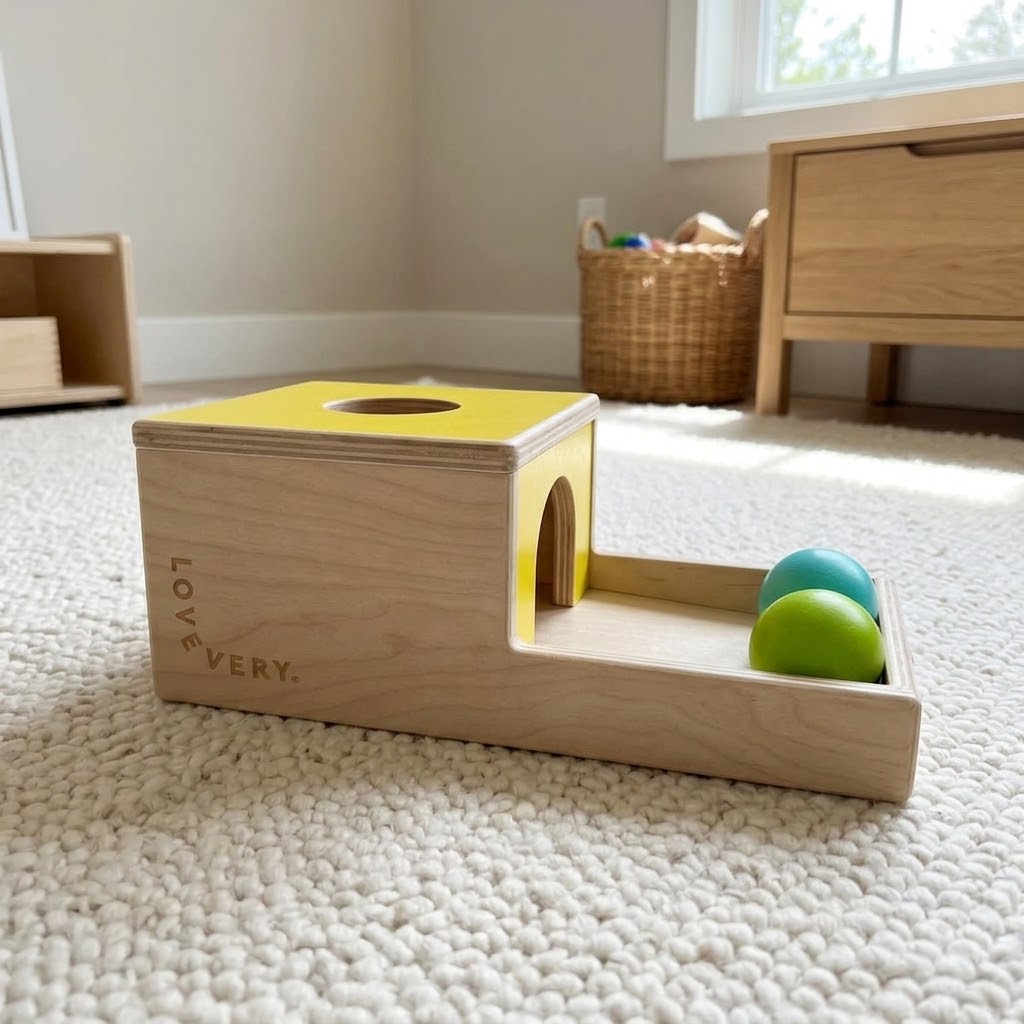
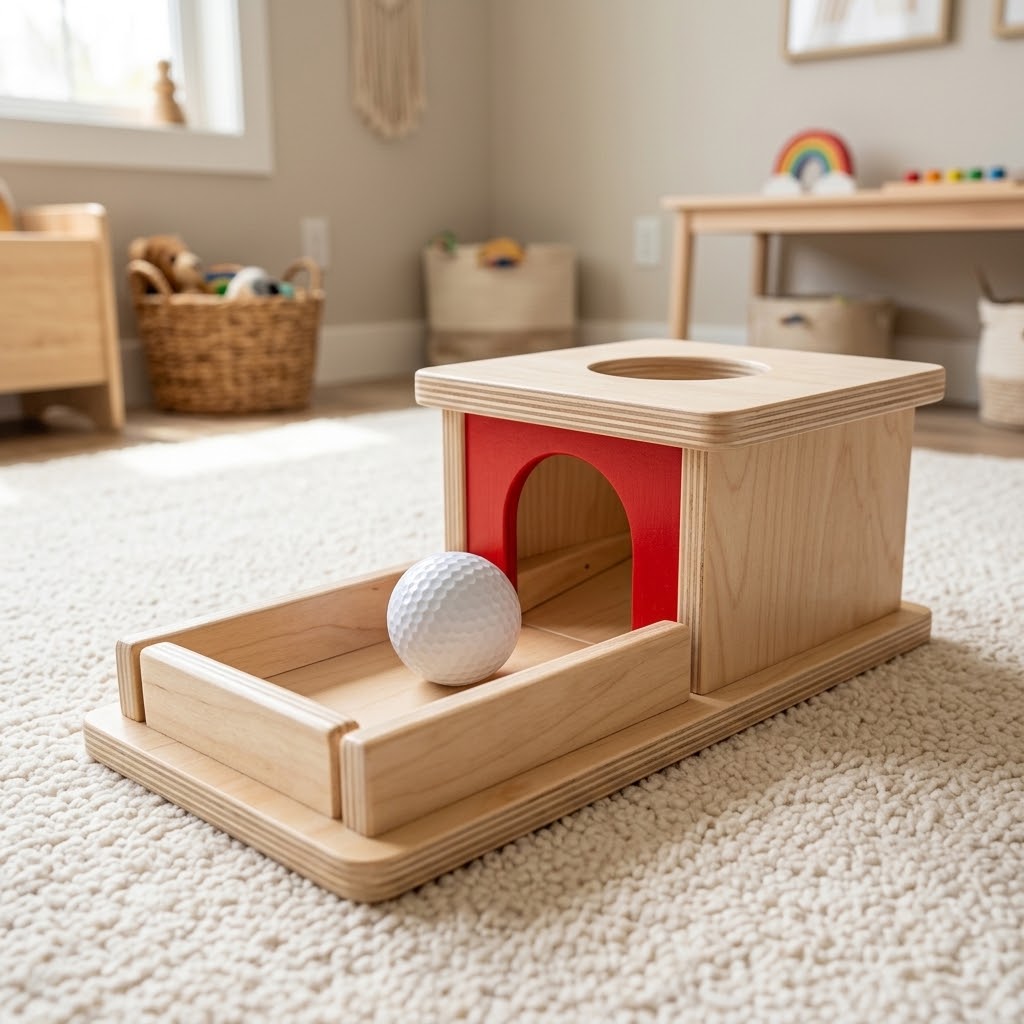
Verdict: Strong dupe
Retailer age guidance: 6 months and older. Listed at CAD $28.95; Thinkamajigs charges US orders in Canadian dollars.
The Ball Drop Box is one of those toys that looks almost ridiculously simple until you watch a baby figure it out.
Our daughter really enjoyed this one. She picked up the basic idea fairly quickly, but dropping the ball into the hole was only part of the fun. She loved the sound it made hitting the wood and rolling out of the opening, and she’d happily play with the balls on their own, too.
There’s quite a bit happening in such a simple game. Your baby is working on hand-eye coordination, learning that their actions produce predictable results, and beginning to understand that a ball doesn’t stop existing just because it disappears inside a box.
What makes it especially appealing is that children don’t need much help once they understand the basic idea. They can repeat the activity as many times as they like, and the ball keeps giving them a satisfying little result.
The good news is that Lovevery didn’t invent this concept.
The Thinkamajigs Object Permanence Box with Tray uses essentially the same drop-and-return mechanism. A ball goes into the wooden box, travels along the inclined interior, and rolls back into view.
It isn’t Lovevery’s exact design, but it offers the experience that makes the original so appealing.
Our take: If you’re buying specifically for a Ball Drop Box, we’d have a hard time arguing that you need the Lovevery version. This is one of the easiest alternatives to recommend.
Thinkamajigs lists this product at CAD $28.95, so keep the Canadian currency in mind when comparing prices and shipping.
Developmental focus: Hand-eye coordination, grasp and release, cause and effect, object permanence.
View the Thinkamajigs Object Permanence Box
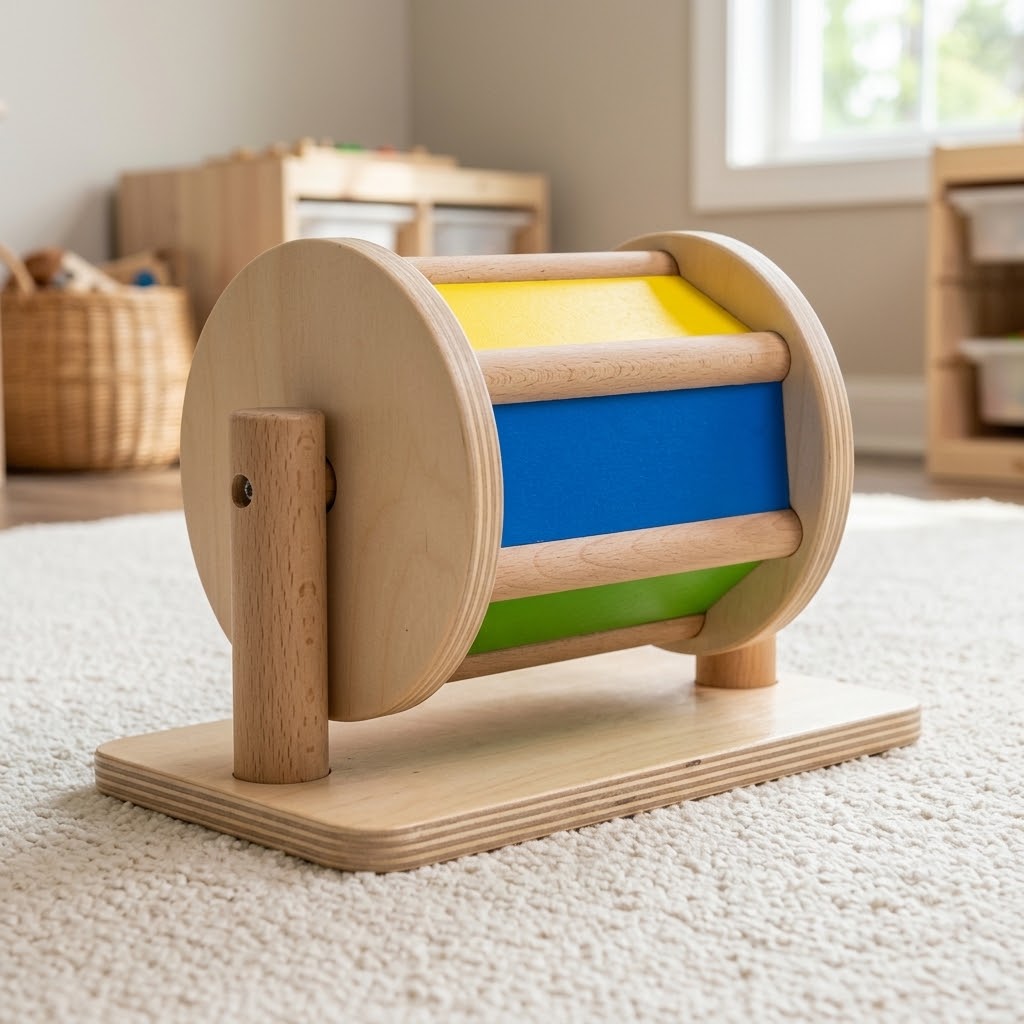
6. Lovevery Spinning Rainbow vs. Nienhuis Montessori Spinning Drum
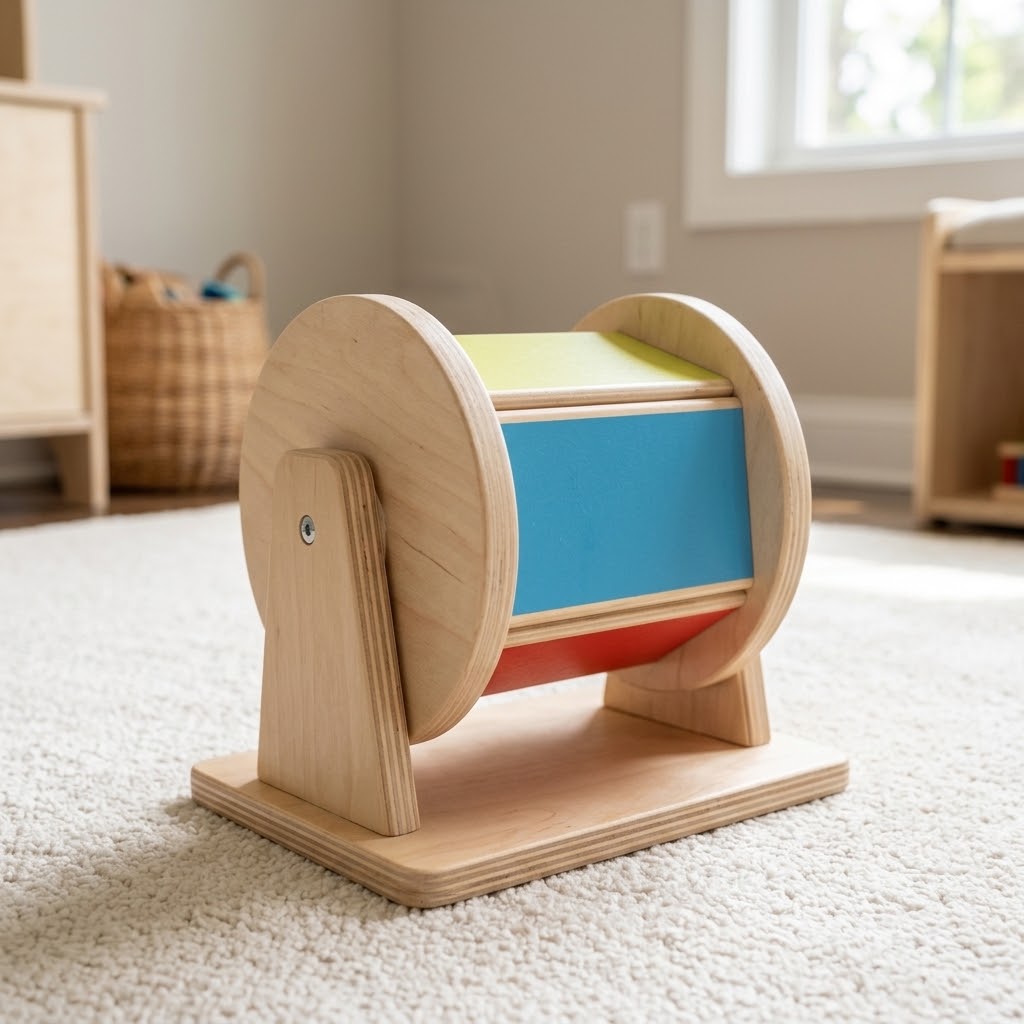
Verdict: Strong dupe
Manufacturer description: 6 months and older.
The Spinning Rainbow is a good reminder that baby toys don’t need a lot of bells and whistles.
Give the drum a little push and it spins, showing different colors as it moves. A baby can watch it, reach toward it, and eventually discover how to set it spinning again.
That’s the whole appeal.
For younger babies, toys that respond to a simple movement can be especially engaging. There’s an immediate connection between what they do and what happens next. A parent can introduce the toy with a gentle spin, then see whether the baby wants to reach toward it.
Lovevery’s version is attractive, but the concept isn’t unique.
The Nienhuis Montessori Spinning Drum is a traditional take on the same activity. It has colored surfaces, a mirror-like panel, and a gentle sound as it rotates.
The two toys don’t look exactly alike, and their sounds and finishes may differ. But from a play perspective, they’re doing much the same job.
Our take: This is another strong alternative. If what interests you is the spinning, watching, and reaching activity, Nienhuis offers a close functional match without requiring a Lovevery Play Kit.
Developmental focus: Coordinated reaching, visual tracking, hand-eye coordination, cause and effect.
View the Nienhuis Spinning Drum
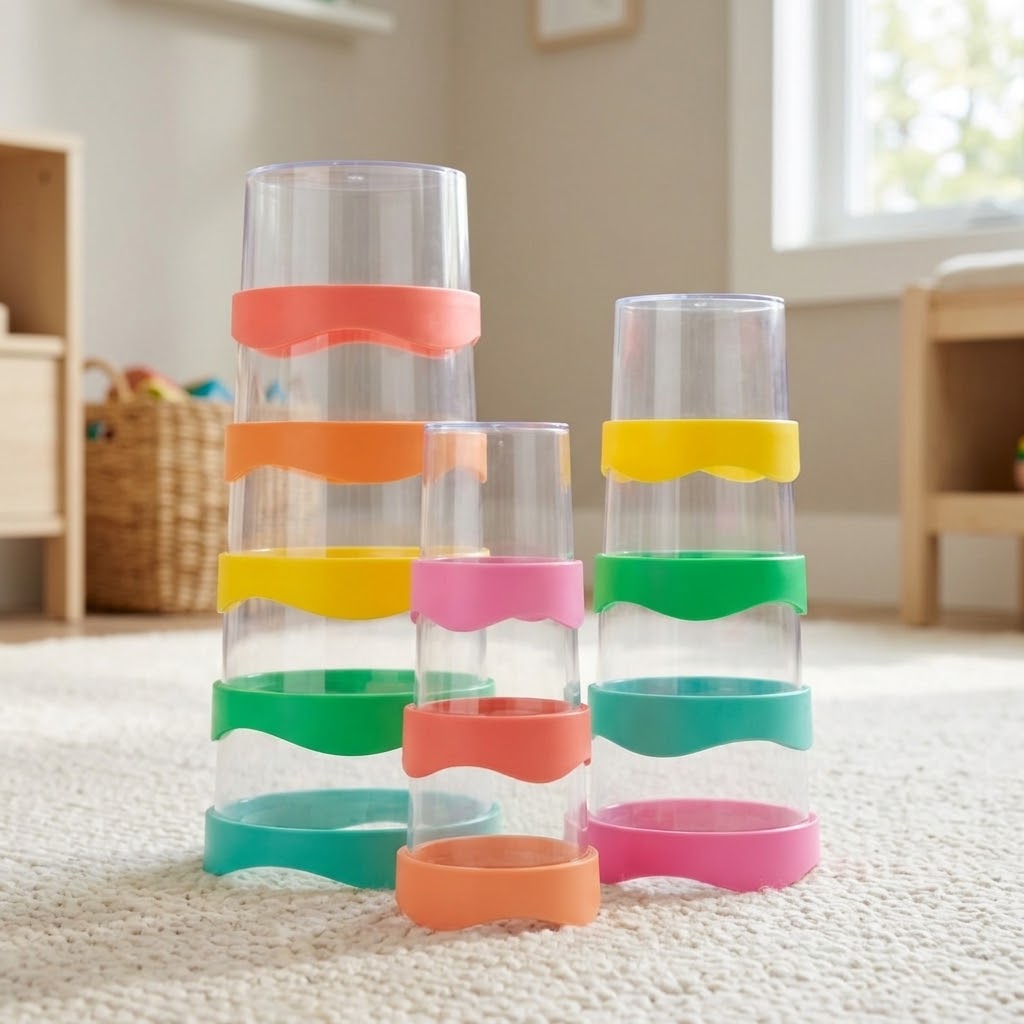
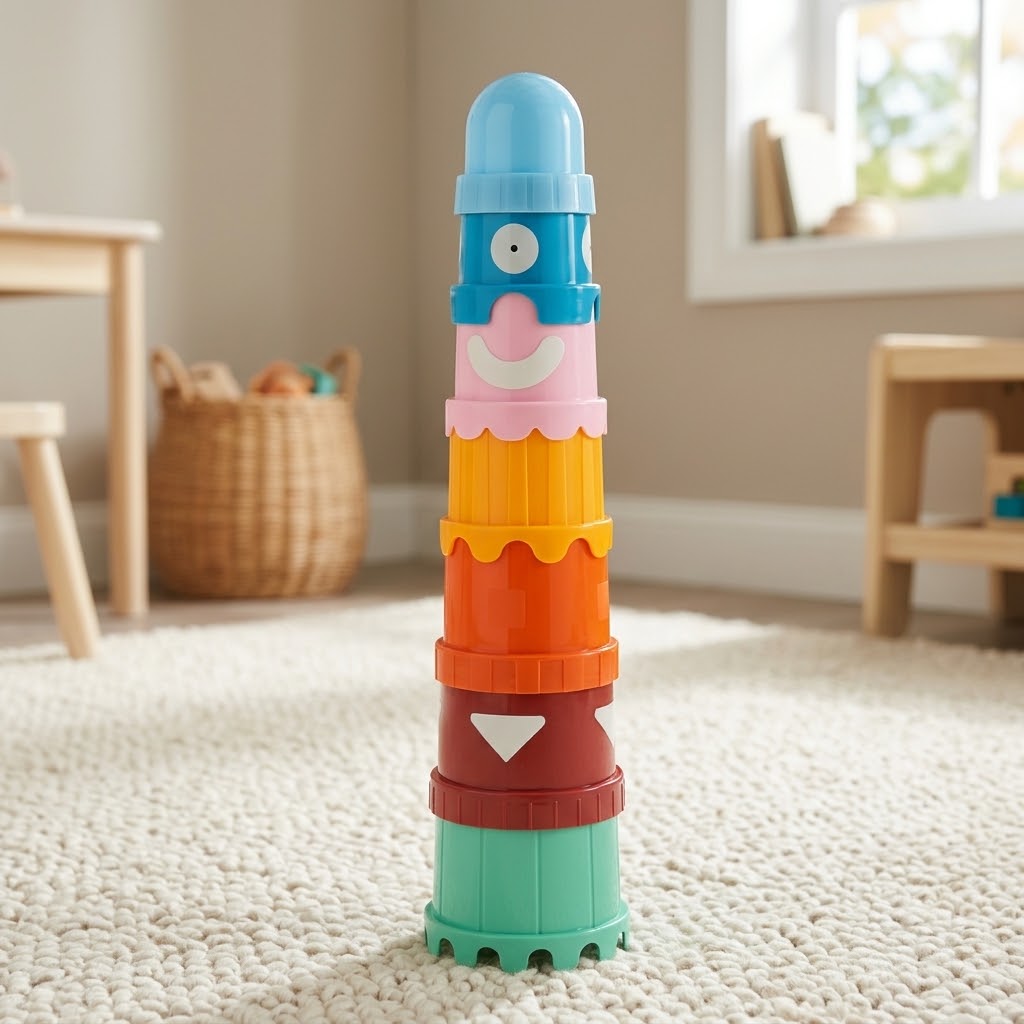
7. Lovevery Nesting Stacking Dripdrop Cups vs. IKEA UPPSTÅ
Verdict: Strong dupe
Manufacturer age guidance: 6 months and older.
Sometimes the cheapest alternative is also one of the easiest to recommend.
Stacking cups are wonderfully uncomplicated toys. Babies can bang them together, pull them apart, and investigate how one fits inside another. Later, they’re building wobbly towers and enjoying the inevitable crash.
And once water gets involved, there’s another whole category of entertainment.
Lovevery’s Nesting Stacking Dripdrop Cups are nicely designed, but IKEA’s UPPSTÅ cups offer the same basic stacking, nesting, and pouring activities for about $2.99.
That’s hard to argue with.
The sets aren’t identical. Shapes, materials, and the way water moves through the cups may differ. But for most parents looking for a basic set of cups to stack and play with, those differences probably won’t be decisive.
There’s also something nice about inexpensive toys that you don’t feel obligated to turn into a major developmental purchase. You can bring out a few cups, let your child experiment, and put them away when they’re done.
Our take: We’d start with IKEA unless there’s something about Lovevery’s specific design you particularly want. This is exactly the kind of simple toy where spending more isn’t necessarily going to improve the experience.
Lovevery has listed its cups separately through its replacement-parts program, but access is restricted to eligible customers, so that isn’t the same as an unrestricted retail purchase.
Developmental focus: Stacking, nesting, spatial awareness, grasp and release.
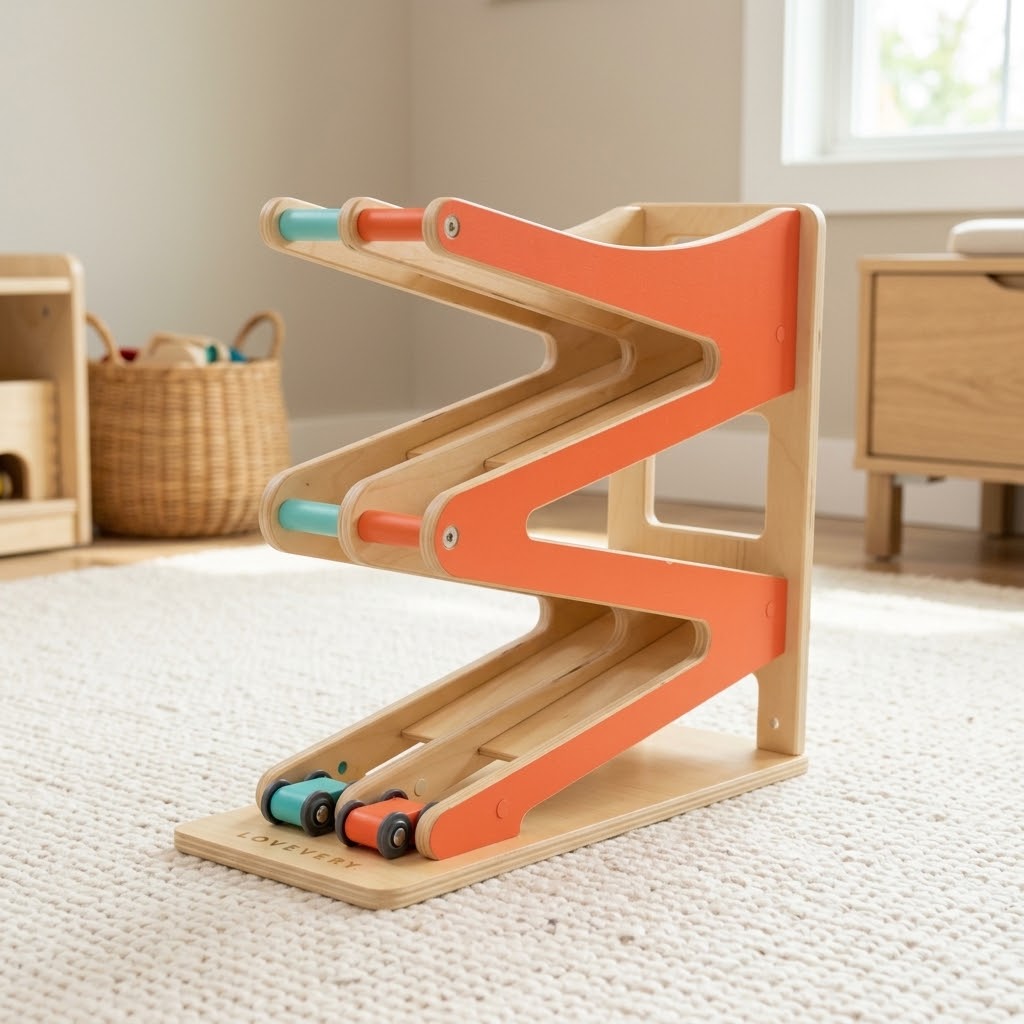
8. Lovevery Race & Chase Ramp vs. Joyfy Car Ramp
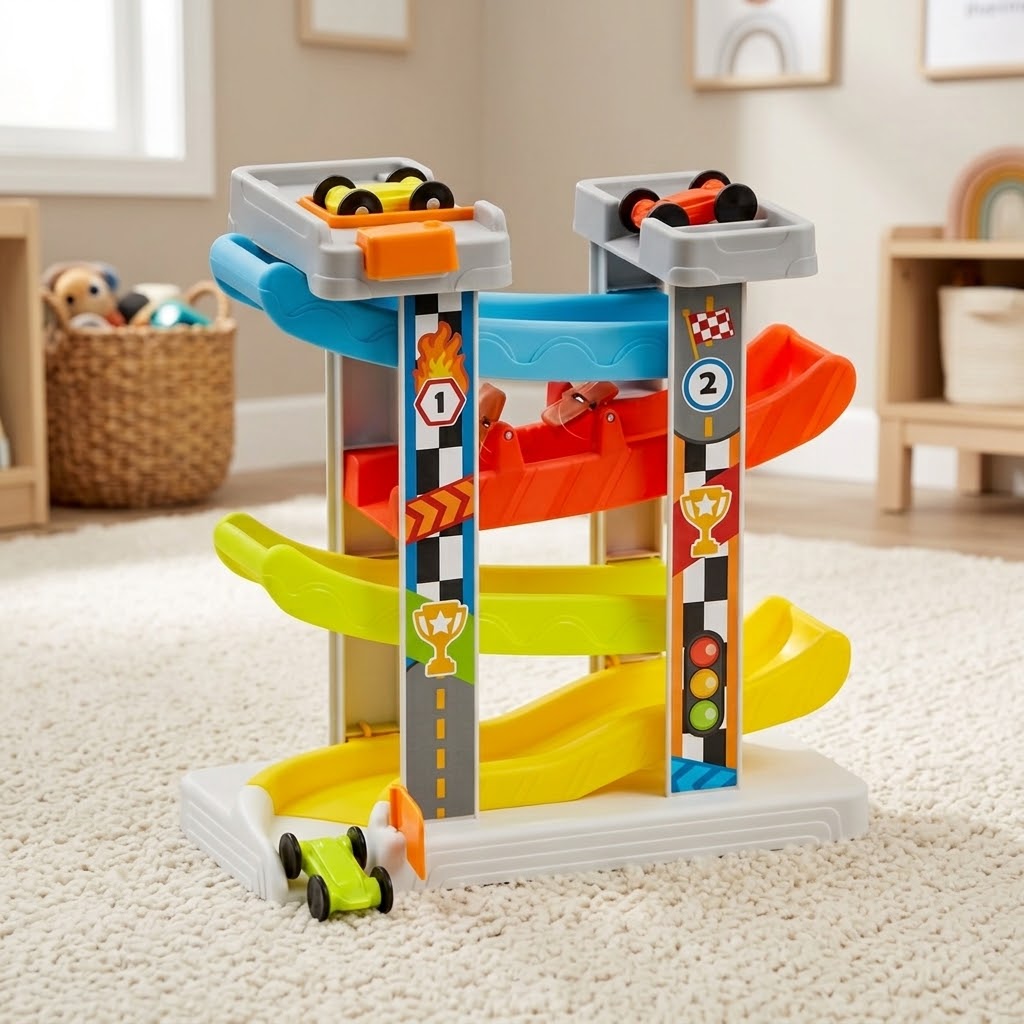
Verdict: No convincing inexpensive dupe found
Retailer age guidance: 18 months and older. The current product specifications identify plastic construction, despite “wooden cars” in the listing title.
There are plenty of toy car ramps on the market. But not all ramps are designed around the same kind of play.
Lovevery’s Race & Chase Ramp lets two cars travel down parallel tracks. That means children can send them off together, watch how they move, and eventually start experimenting with racing them.
It’s a small distinction that changes the game.
A single car rolling down a ramp is a straightforward cause-and-effect activity. Two cars side by side invite comparison. Which one got there first? What happens if you release them at different times? Can you make them finish together?
You don’t need to turn those questions into a lesson. They’re simply things that might make the toy more interesting as your child gets older.
The Joyfy Car Ramp is a much less expensive option. Cars travel down a series of levels, changing direction along the way. If your child mainly likes watching cars race around a track, there’s plenty to enjoy.
But Joyfy doesn’t recreate Lovevery’s side-by-side racing design.
We also found a closer dual-lane option from Lakeshore Learning, although at roughly $60 before purchasing the cars separately, it isn’t a particularly compelling budget substitute.
Our take: Joyfy is a reasonable inexpensive car-ramp toy, but we wouldn’t call it a true Lovevery dupe. If the simultaneous racing feature is what appeals to you, the original has a meaningful advantage.
Developmental focus: Cause and effect, visual tracking, hand-eye coordination, taking turns.
Flourish
You probably already own some great developmental toys
A ball, a few containers, or a couple of toy cars can be the start of a great activity. Flourish helps you discover practical ways to build on the skills your child is beginning to explore.
9. Lovevery Wooden Coin Bank / Carrot Box vs. Montessori Carrot Harvest Game
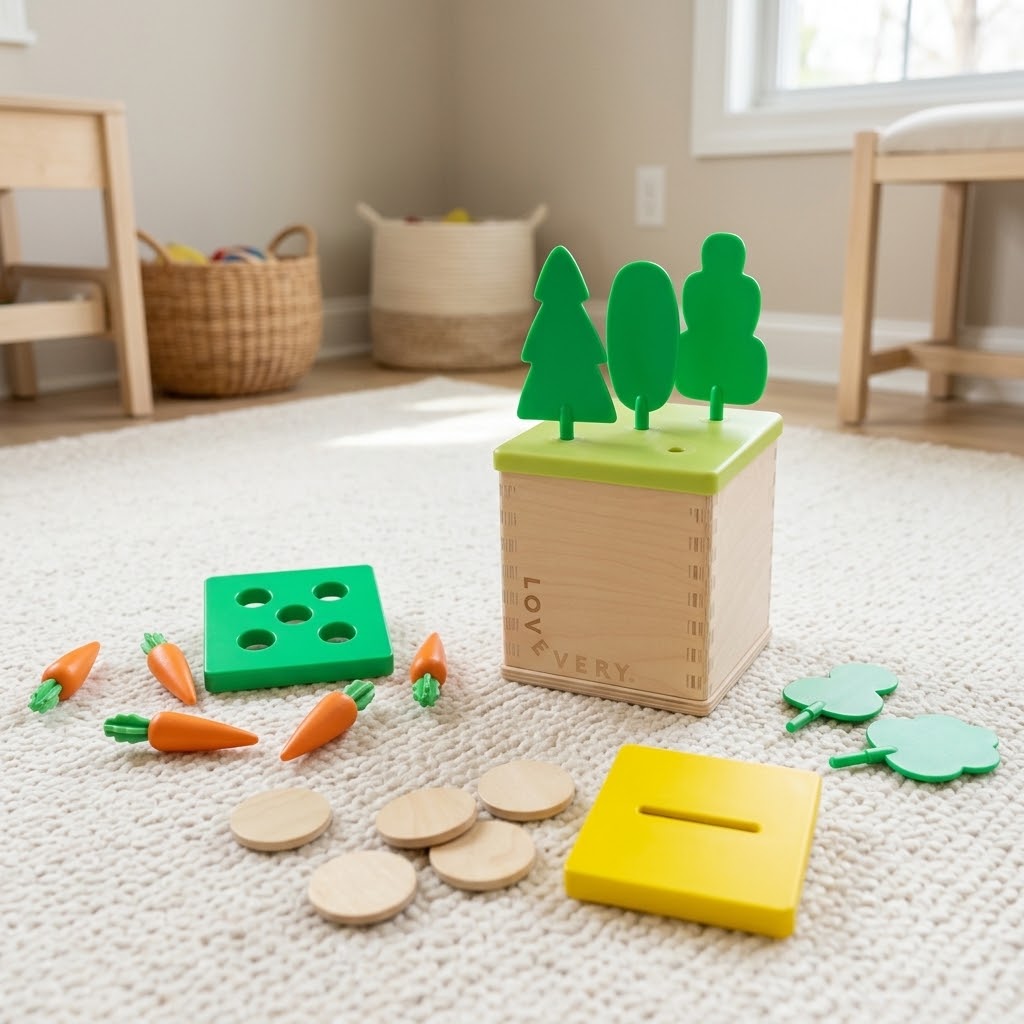
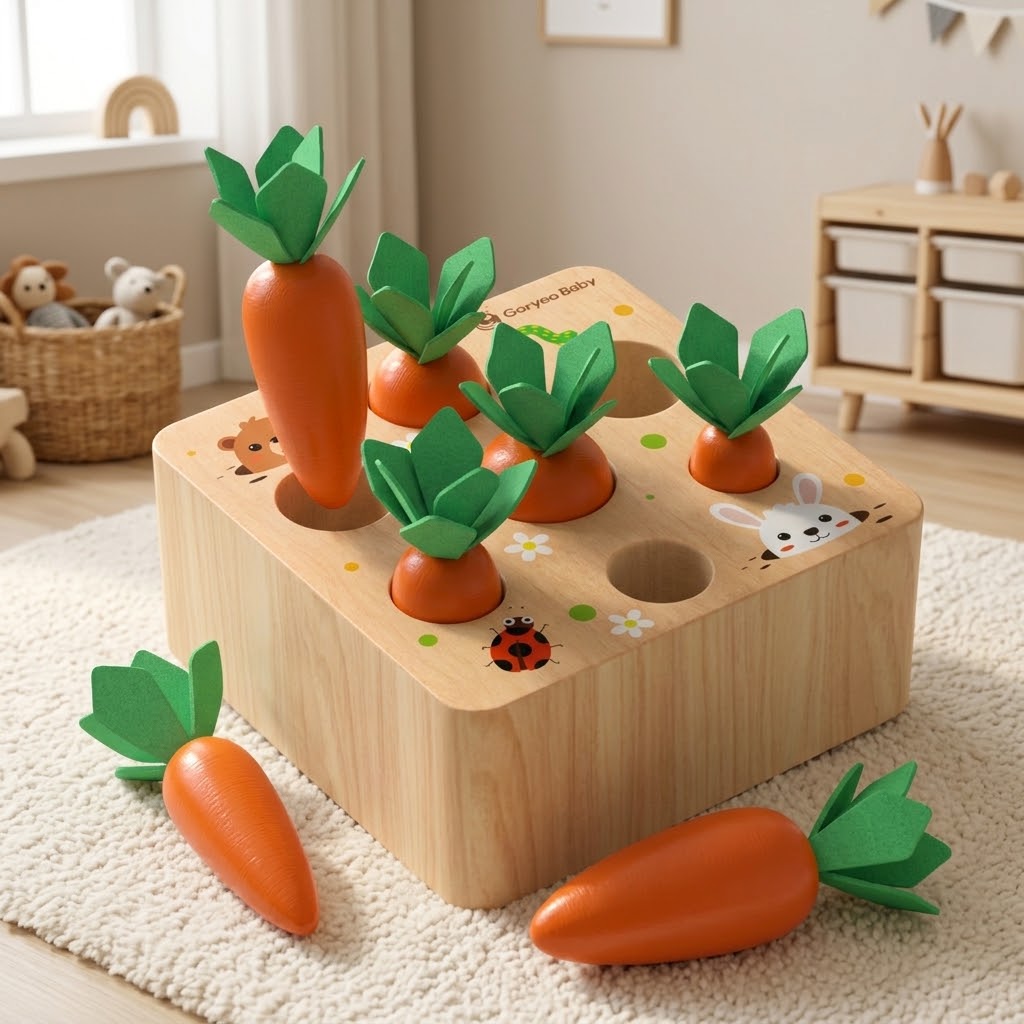
Verdict: Partial alternative
Walmart identifies this as a KMTJT toy and lists a minimum recommended age of 1 year in its product specifications. Other listing text gives conflicting age guidance; check the product packaging and manufacturer instructions before use. Price varies by seller and color.
We didn’t expect a handful of wooden carrots to have quite this much staying power.
More than a year later, our daughter still runs around the house carrying carrots from both her Lovevery set and a cheaper carrot-harvest toy we bought at Walmart.
When she first started playing with them, getting each carrot into the right hole was a real challenge. It was fun watching her gradually work out how to line them up and figure out which carrot belonged where.
And because she enjoyed playing with the carrots separately, she didn’t have to master the whole game to have fun with it.
Our dog also developed a particular fondness for the cheaper Walmart carrots, although his preferred method of playing involved trying to eat them. We learned pretty quickly to keep those out of his reach.
What makes this type of toy so good is that the challenge is built right into the play. A carrot either fits into an opening or it doesn’t. Children can experiment, make mistakes, and gradually get better at matching pieces without needing a parent to direct every move.
Lovevery’s Wooden Coin Bank Set goes beyond the carrots. Its interchangeable lids introduce other posting activities, including fitting coins through slots. That gives children several different ways to practice using their hands and figuring out how shapes fit together.
A basic Montessori Carrot Harvest Game doesn’t offer that same versatility, but it does capture the carrot-matching experience.
And if the carrots are what interest your child, that may be more than enough.
Our take: We’ve gotten lasting enjoyment from both versions of the carrots. The inexpensive toy is worth considering, but it’s not a complete replacement for Lovevery’s interchangeable posting activities.
The Walmart product is listed under KMTJT and has conflicting age information in its listing. Check the actual manufacturer’s packaging and age guidance before purchasing, especially for younger children.
Developmental focus: Hand-eye coordination, shape and size matching, problem-solving, two-handed coordination.
View the Montessori Carrot Harvest Game
10. Lovevery Magic Tissue Box vs. MindWare Sensory Sprouts Peek & Pull
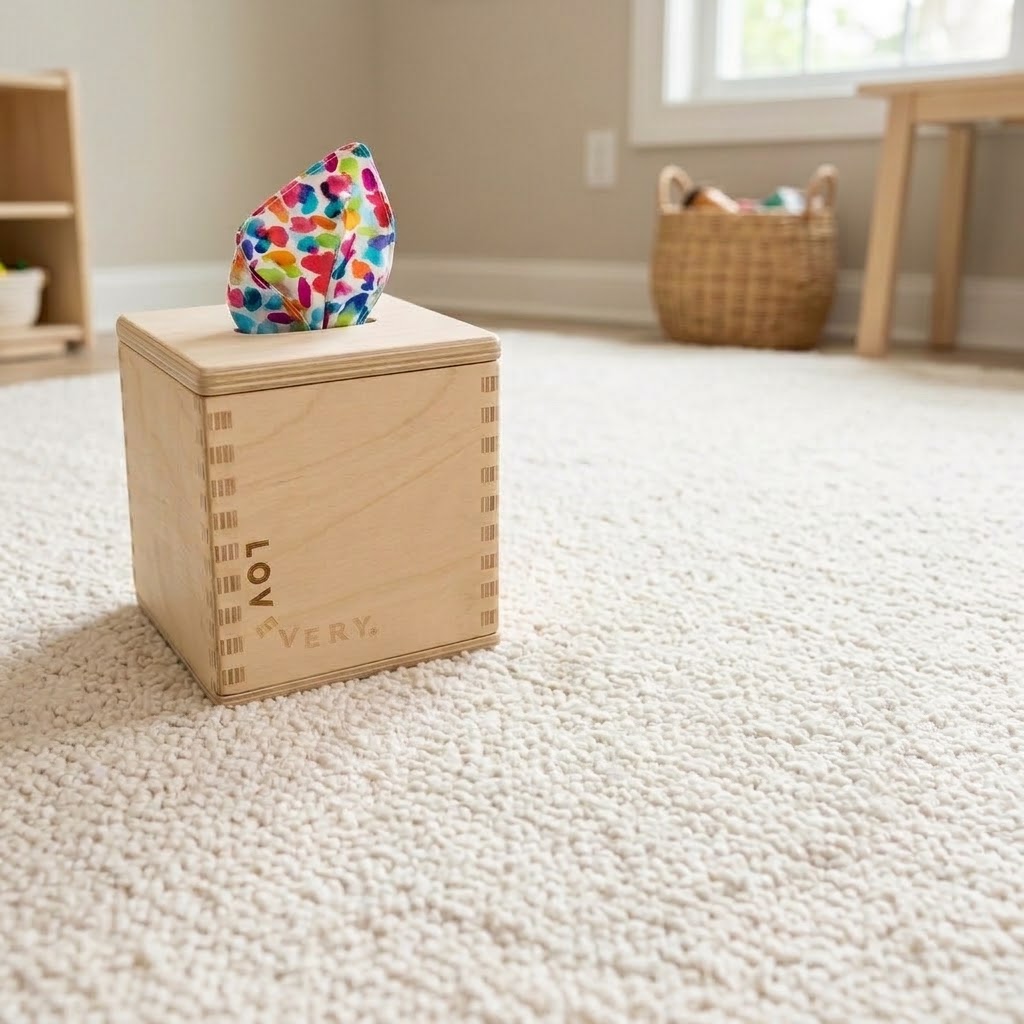
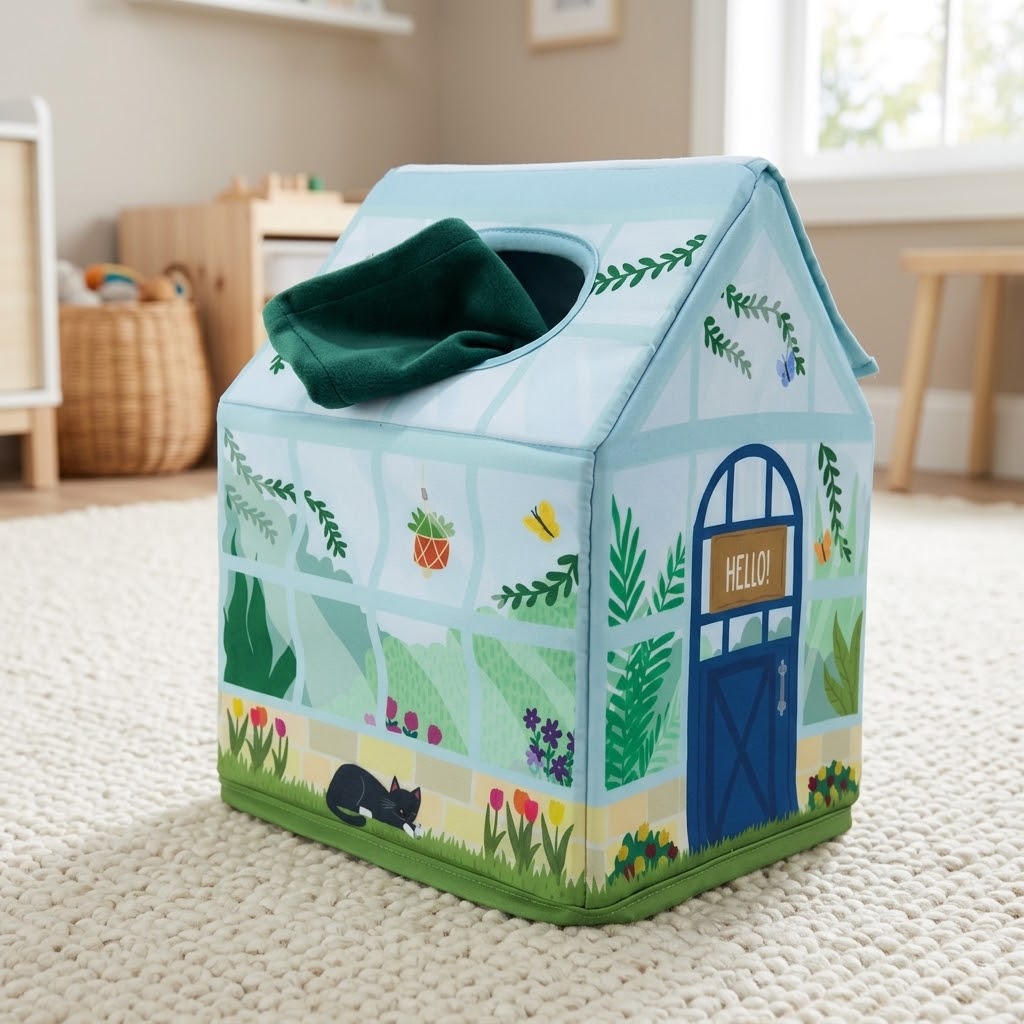
Verdict: Partial alternative
Retailer age guidance: 6 to 36 months. Listed at $27.99 during our latest check.
If you’ve ever watched a baby enthusiastically empty a box of tissues, you’ll immediately understand the appeal of this toy.
There’s something very satisfying about grabbing a little piece of fabric, pulling it out, and discovering there’s more waiting underneath.
Lovevery’s Magic Tissue Box turns that familiar baby obsession into a reusable toy. The tissues connect to one another, creating a continuous pulling experience that’s a big part of the design.
MindWare’s Sensory Sprouts Peek & Pull takes a similar approach with colorful, textured scarves that children can pull from a fabric container.
It covers a lot of the same ground: reaching, grasping, pulling, exploring textures, and eventually trying to put everything back.
The main difference is how the fabrics come out.
Lovevery’s linked tissues keep the action going. MindWare’s separate scarves are more individual pieces, so the experience involves pulling them out and reloading the box.
For some children, that distinction may not matter at all. Others may particularly enjoy the continuous pulling effect of Lovevery’s design.
The MindWare version also uses a fabric box rather than Lovevery’s wooden construction, which is worth considering if the look and feel of the toy matter to you.
Our take: MindWare is a reasonable alternative for sensory fabric play, but Lovevery’s linked-tissue design remains distinctive. We’d choose based on which experience interests you more, rather than treating these as identical toys.
Developmental focus: Grasping and pulling, sensory exploration, two-handed coordination, putting objects in and taking them out.
View the MindWare Sensory Sprouts Peek & Pull
Do you actually need the toy to practice the skill?
Here’s something worth remembering when you’re deciding which toys to buy: children don’t need the branded version of an activity to get something out of it.
A ball-drop box is interesting because a baby can put something in and see what happens. Stacking cups are interesting because they fit together, come apart, and occasionally fall over in spectacular fashion. A lockbox is interesting because opening something that was previously closed feels like a genuine accomplishment.
Those experiences aren’t exclusive to expensive toys.
You can play hide-and-seek with a favorite object, stack ordinary child-safe containers, roll a ball across the floor, or give your toddler things to put into and take out of a basket.
That doesn’t mean every household item replaces a purpose-built toy, and it certainly doesn’t mean the toys aren’t worth buying. We love plenty of ours.
It just means you have more options than a shopping list might suggest.
One of the ideas behind Flourish is that play should follow what your child is ready and interested in exploring, rather than becoming another checklist of milestones to rush through.
If your child is fascinated by putting things into containers this week, you can build on that. If they’re suddenly obsessed with knocking over towers, there’s plenty to explore there, too.
The important part isn’t keeping up with a particular toy subscription. It’s finding enjoyable ways to spend time together while your child discovers what they can do.
So, are Lovevery dupes worth buying?
Absolutely. Some of them.
We’d be particularly comfortable recommending alternatives for the Ball Drop Box, Spinning Rainbow, Lockbox, and Stacking Cups. Those are toys where we found less expensive options that deliver much of the same core play experience.
Others are harder to replace.
The Lovevery Play Gym is a great example. There are cheaper ways to give your baby a play mat and hanging toys, but we got so much use out of the original that we’d gladly make that purchase again.
And products like the Slide & Seek Ball Run and Race & Chase Ramp have specific features that make superficially similar alternatives less convincing.
Ultimately, the best choice comes down to what you’re actually buying the toy for.
If you want the convenience of a thoughtfully assembled Play Kit, Lovevery can be worth the premium. If you’re interested in one particular activity, there’s a good chance you can find a solid alternative or recreate something similar at home.
Great developmental play doesn’t have to come with a premium price tag.
And you don’t need to buy every toy on this list to give your child plenty of wonderful things to explore.