
The first time I played peekaboo with Lainey, I was wearing sunglasses.
I was holding her and lifted them to look at her and talk. She saw my eyes and burst into laughter. Glasses down: serious face. Glasses up, “Boo!”: laughter again.
For a couple of weeks, lifting those sunglasses was a reliable way to make her laugh.
These days, she runs behind the kitchen table, pops her head around, and says “boo” herself. Then she disappears again, ready for another round.
She’s become the one setting up the surprise.
Games like these give you plenty to notice: the anticipation, the back-and-forth, the child who starts deciding when the reveal should happen. They also bring up a question many parents eventually search for: when do babies understand that something still exists when they can’t see it?
The short answer
Object permanence is the understanding that people and objects continue to exist when they’re out of sight. You’ll often notice more looking and searching during the second half of the first year.
What is object permanence?
Object permanence is the understanding that people and objects continue to exist when they’re out of sight. The toy is still under the cover. Your face is still behind your hands.
You can see why hiding and finding become interesting games. There’s something to look for, somewhere it might be, and the satisfaction of finding it again.
In Flourish, we explore this kind of learning within Communication & Play, alongside shared attention, imitation, gestures, and other ways your child connects with you and explores ideas.
When do babies develop object permanence?
You’ll often notice more looking and searching during the second half of the first year. The American Academy of Pediatrics discusses object permanence in its guidance for babies ages 8–12 months, including searching for a toy hidden under a cover.
The CDC gives two useful examples of what parents can observe:
- By 9 months: looking for an object that drops out of sight, such as a spoon or toy.
- By 1 year: looking for something they watched you hide, such as a toy under a blanket.
Those are different things to notice, rather than one birthday when the whole ability suddenly arrives. The CDC’s ages describe what most children can do by that point; they aren’t the average age of a first attempt.
The useful question during play is what your child does with the situation in front of them. Do they follow where the toy went? Reach toward the visible part? Move something to find it?
What can you notice during everyday play?
There’s more to watch than whether your child finds the toy.
They look where something went. A toy slips beside them, and their eyes or body turn toward it. You have an opening to pause and see what they do before handing it back.
They use a visible clue. Part of a familiar toy is sticking out. They might reach for that part, move the cover, or look between you and the toy. Notice which approach interests them.
They search where they saw you hide it. They watch the toy go under a cover, then reach toward that spot or lift the cover to find it.
And sometimes they’re interested in the cover itself. That’s useful to notice too. You can bring the toy back into view and make the next turn simpler.
Enjoying peekaboo and searching for a hidden object give you different observations. A laugh is a lovely part of the interaction; it doesn’t give you a precise date when object permanence developed.
Three ways to bring hiding and finding into play
Let them enjoy the reveal
Cover your own eyes with your hands, uncover them, and give your child time to respond. A familiar voice and an expression they recognize are enough to start a back-and-forth game. If they begin copying you, leave room for their turn.
Leave a clue
During play together, partly cover a familiar, age-appropriate toy with a lightweight cloth, keeping it away from your child’s face. Leave enough of the toy visible to catch their interest. A comfortable floor position and an easy-to-reach toy let you focus on what they choose to do.
Our Find the Hidden Toy activity walks through the setup, simpler versions, and ways to adapt the game.
Let them run the game
When your child starts hiding and reappearing themselves, follow their lead in a clear, safe play space. Give them time to pop back into view and enjoy being the one who surprises you.
Lainey’s kitchen-table routine is a good reminder that a game can stay familiar while your child finds a new role in it.
Do you need an object permanence toy?
A familiar toy and a lightweight cover can give you a hiding-and-finding game to explore together. A dedicated toy offers a particular version of that experience.
A ball-drop box, for example, adds aiming and releasing a ball into an opening, then finding it again when it returns. Lifting a cover to retrieve a toy asks your child to do something different. Think about which part of the play your child is interested in when deciding what to offer.
If you’re considering a purchase, our Lovevery alternatives guide looks at the Ball Drop Box and other toys, including what you gain from the design and when a simpler option makes sense.
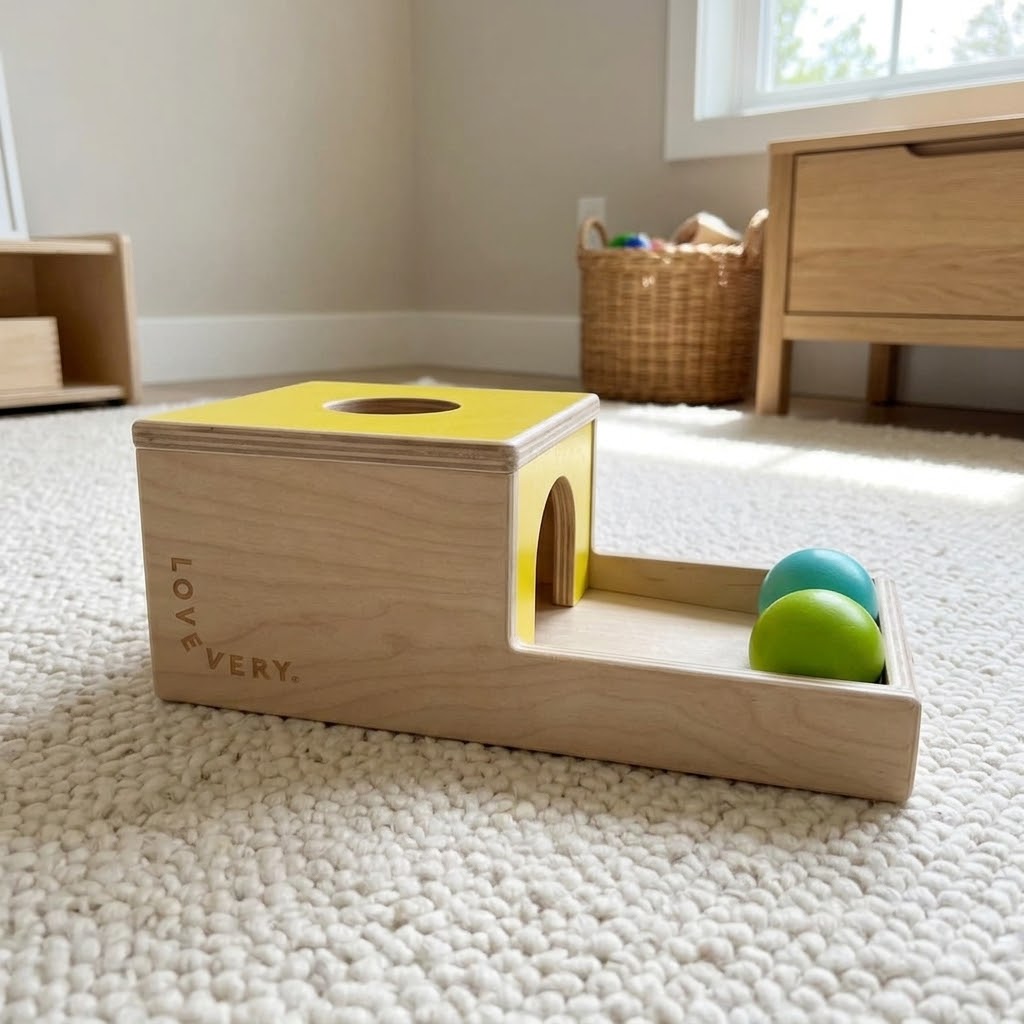 Lovevery Ball Drop BoxLovevery dupes: what to buy and what to skip
Put what you notice to work
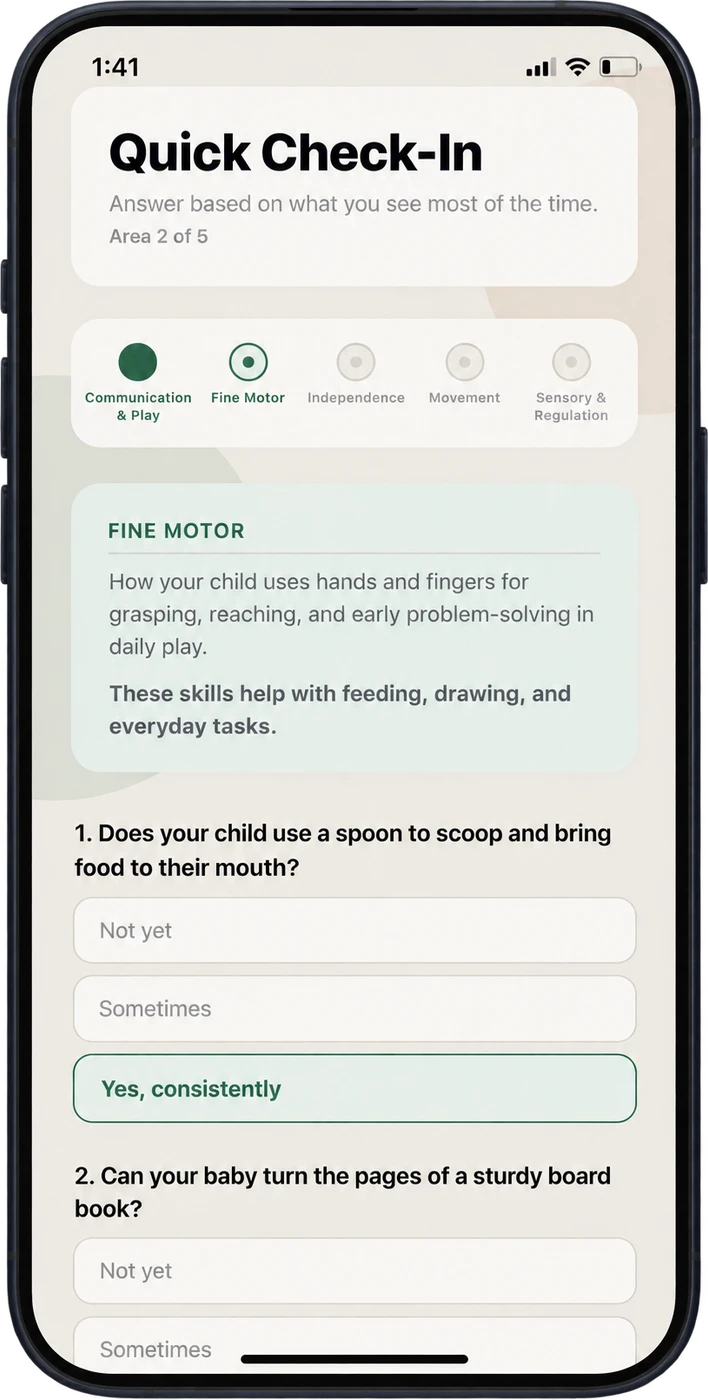
Find your child’s starting point across five development areas, then get Daily Activities matched to what they’re learning.
One-touch feedback and regular check-ins keep the guidance connected to the progress you’re seeing.
If you’re concerned about what you’re seeing
If your child isn’t showing the abilities on an age-appropriate milestone checklist, loses an ability they previously used, or you have concerns about their development, share what you’ve noticed with their pediatrician. Specific examples from everyday play are useful to bring to that conversation.

