Fine Motor

Fine motor skills: discovering what their hands can do

Grabbing your shirt. Turning the page before you’ve finished reading. Carefully placing one block on another, then enthusiastically demolishing the whole thing.

Your child’s hands are busy. As they learn to reach, hold, release, and use objects, they’re building skills that show up throughout their day, from playing with toys to feeding themselves.

Fine motor skills are the controlled movements of the hands and fingers that help your child handle objects and take part in everyday life. Understanding what they’re practicing helps you notice progress and find something useful to try together.

Flourish helps you find that starting point, then recommends Daily Activities across Fine Motor and four other development areas.

What can you notice in everyday play?

You don’t need to set up a test. Watch what happens when your child has something they want to explore.

Reaching for a toy and holding onto it
Directing their hand toward something and getting a useful grip
Moving a toy from one hand to the other
Coordinating both hands while keeping control of the object
Putting a block into a cup
Bringing an object toward a target and letting it go intentionally
Picking something up between thumb and finger
Using more precise finger movements
Turning pages or stacking blocks
Adjusting their grip and controlling how they move objects
Making marks with a crayon
Using a tool to create something they can see

These abilities appear in Flourish’s Fine Motor benchmarks and parent check-ins. Reaching, transferring objects, using a thumb-and-finger grasp, and putting objects into containers also appear in the CDC’s developmental guidance. CDC: six months, nine months, one year.

The useful question during play is: what is your child already doing, and what are they beginning to try?

A child who enjoys emptying a basket gives you a different starting point from one who is carefully fitting pieces together. Both give you something to work with.

Four ways to practice together

These examples come from activities in Flourish. Choose one that fits what your child is exploring now. Stay with them, follow product age guidance, and keep small parts out of play for children under three. Being good at handling something doesn’t make it safe to use. CPSC toy safety.

Let them turn the page

Reading together gives your child a reason to use their hands: they want to see what comes next.

Hold a sturdy board book where they can reach it. Leave a page slightly lifted so there’s an edge to catch, then give them time to try. Help with the part they’re finding difficult and let them finish the turn.

You can linger on a favorite picture. There’s no requirement to finish the book, and being in charge of the pages may be half the appeal.

From Flourish: Board Book Page Turning.

Put things in. Take them out. Repeat.

Set out an open container and a few large, age-appropriate toys. Show your child how to put one inside, then let them explore.

If getting something into the container is difficult, try a wider opening or a toy that’s easier to hold. If taking everything out is what interests them, start there.

This gives you something specific to notice: are they reaching inside, pulling an object out, or beginning to let go where they intended? The CDC also includes blocks and container play among its suggested activities. CDC activity guidance.

From Flourish: Put In and Take Out.

Build a tower worth knocking down

Use large, stable blocks suited to your child’s age. Make a low tower and leave a block nearby for them to add.

If balancing it is frustrating, use a wider block or keep the tower lower. When they’re managing comfortably, offer another block and see what they decide to do.

Knocking it down is a perfectly reasonable ending. You can build another one.

From Flourish: Block Tower Building.

Give their scribbles somewhere to go

Secure a sheet of paper to the table or tray so it stays put. Offer a large, non-toxic crayon intended for your child’s age, make a few marks yourself, and give them a turn.

Let them explore the marks they can make. They don’t need to copy a picture or produce something recognizable. If the crayon is awkward to hold, a chunkier one may be easier to manage.

Scribbling is itself a developmental skill, and an opportunity to explore using a tool. CDC: scribbling.

From Flourish: Crayon Scribble.

Where is your child starting?

Two children the same age can bring very different abilities to the same activity. Your child might be confident on their feet while still working out how to stack a block or use a spoon.

That’s why Flourish gets to know each development area separately.

The onboarding check-in asks about things you can observe, including how your child handles toys, uses their hands, and takes part in daily routines. Your answers help establish a personalized starting point across all five areas.

You bring what you know about your child. Flourish helps turn it into a useful place to begin.

Flourish’s onboarding check-in asking about observable Fine Motor abilities
Flourish app

Know what to try today, and what to notice next

Finding an activity is one job. Keeping it relevant as your child changes is another.

Flourish recommends Daily Activities based on their starting point. One-touch feedback helps the app understand how those activities are going, while regular benchmark check-ins capture the abilities you’re seeing develop.

You can record activities and everyday firsts along the way. A page turned, a new way of playing, something they’re suddenly determined to do themselves. Those moments are worth noticing.

Fine Motor is one part of that picture. Flourish brings it together with Movement, Communication & Play, Sensory & Regulation, and Independence, so you have practical guidance across all five.

Explore the five development areas

Do you need different toys?

Start with what you already have. The examples above use a book, blocks, a container, and crayons. What matters when choosing an activity is understanding what it asks your child to do.

If you’re considering something new, our Lovevery alternatives guide compares blocks, stacking cups, and other toys, including what a simpler alternative offers and which extras you might actually use.

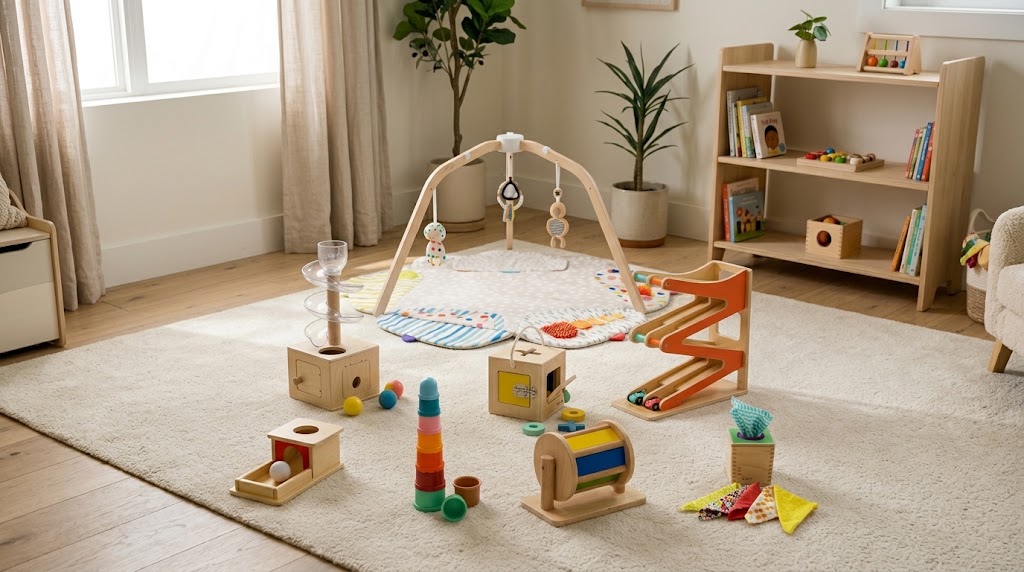
Lovevery toys and affordable alternatives arranged in a playroomLovevery alternatives guide

If your child loses an ability they previously had, or something about their hand use concerns you, bring that observation to their pediatrician. CDC guidance for concerns.