

Sensory & Regulation

Sensory development and regulation in babies and toddlers

Getting comfortable in their world

Your baby pauses when they hear a bird. Your toddler happily splashes in a puddle, then objects strongly to having wet sleeves. The vacuum starts, and suddenly being held feels much more appealing than playing on the floor.

Everyday life gives your child plenty to take in. Paying attention to their responses helps you understand what draws them in, what feels like a lot, and where a different approach might help.

Flourish helps you notice those patterns and find practical ways to explore together.

Sensory & Regulation includes how your child experiences sounds, textures, light, movement, and other sensations, along with their growing ability to settle, engage, and handle changes with your support.

What is your child showing you?

You probably already know some of their preferences. The song that gets an immediate smile. The clothing they keep pulling at. The place they love visiting, and the one where they spend most of the time in your arms.

Those observations are useful. Look at what happens around the response, too.

They turn toward a sound or move away from it
Which sounds interest them, and which feel overwhelming
They reach into water but avoid a sticky texture
How they respond to different kinds of touch
They seek movement or prefer a steady position
What kinds of movement they enjoy
They settle more easily with your help in a quieter space
What support and surroundings help them recover
They stay with a familiar game but struggle in a busy room
How the setting changes their experience
They handle a transition better when they know what comes next
Which routines and cues make changes easier

A single reaction gives you a moment to notice. Repeated experiences give you more context.

Perhaps water play goes well until splashing starts. Perhaps the playground is enjoyable early in the morning, before it gets crowded. That detail gives you something practical to work with.

Four ways to explore together

These examples come from activities in Flourish. Choose one that fits your child’s abilities and interests, and stay with them throughout.

Take a walk with something to listen for

Choose a quiet outdoor spot. Hold your baby securely, supporting their head and neck as needed, or walk alongside your child if they’re already walking.

Pause when you hear something: a bird, leaves moving, a dog in the distance. Name it, then leave a little room to listen.

Your child might turn, point, become still, or make a sound of their own. Follow whatever catches their attention.

There’s no need to turn the walk into a running commentary. One interesting sound can be plenty. If the surroundings become too busy, move somewhere quieter.

From Flourish: Nature Walk with Sound Awareness.
Give water play a manageable starting point

For a child who can sit steadily, set a shallow tray of water on a stable surface within easy reach. Add a large, age-appropriate floating toy.

Let them decide how to join in. They might watch you move the toy, touch the surface, or go straight to splashing.

If splashes are unwelcome, use less water and keep the movement small. If they’re enjoying it, an easy-to-hold cup gives them another way to explore.

Stay within arm’s reach with your full attention on your child. Empty the water immediately afterward.

From Flourish: Calm Water Play.

Put an empty laundry basket to work

For a child already walking confidently, an empty laundry basket can become something to push along a clear, level stretch of floor.

Show them how it moves, then let them try. Stay nearby and keep the route away from stairs, slippery surfaces, and obstacles.

Notice whether they enjoy the pushing, how they adjust their effort, and when they want to stop. If it’s awkward, help move the basket together or choose something easier.

The basket should move comfortably. There’s no need to load it up to make the activity count.

From Flourish: Laundry Basket Push.

Make room for quieter play

Choose a comfortable spot away from the busiest part of the room. Put out a familiar book and one or two suitable toys.

Explore it together when your child is already comfortable. Sit nearby, look at the book, or let them investigate what’s there.

If they seem distracted, simplify the space. A quieter corner doesn’t need music, special lighting, and a collection of sensory equipment.

Keep it somewhere they can enjoy with you and return to willingly. For babies, choose a clear floor space where you can sit and play together.

From Flourish: Calm Corner Exploration.

Help new experiences feel approachable

When something feels unfamiliar, consider how your child could take part comfortably.

With a new texture, that might mean watching you first or using a suitable tool before touching it. With sound, it might mean turning off the background music so there’s less happening at once.

Keep the experience predictable and give them room to pause. You can return to it another day.

There’s useful progress in finding a way to participate. A child who watches the water, then chooses to touch it, has found an opening you can build on.

Your support is part of regulation

Babies and toddlers learn to manage feelings with help from the adults around them. Being held, hearing your familiar voice, or moving somewhere quieter can all be part of that support.

This is often called co-regulation: helping your child through an experience while their own abilities are still developing.

Sensory experiences are part of the picture, alongside hunger, tiredness, frustration, and everything else happening that day. When play becomes difficult, look at the whole situation.

Sometimes the useful next step is a different activity. Sometimes it’s lunch.

Where is your child starting?

Your child might love climbing, approach new textures cautiously, and need plenty of help moving on from a favorite game. Those abilities and preferences don’t fit neatly into one age label.

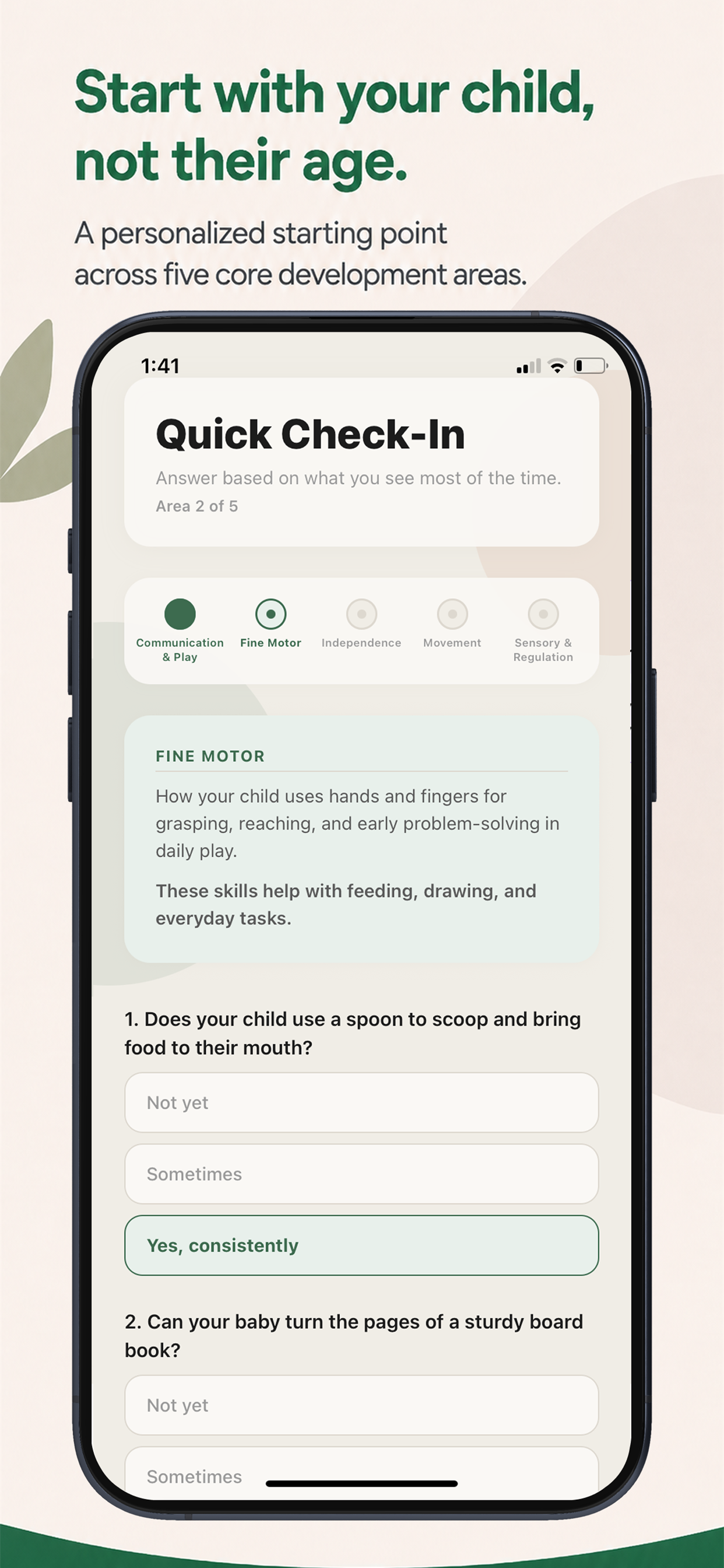
Flourish’s onboarding check-in helps establish a starting point across five development areas, including Sensory & Regulation. It asks about things you can observe, such as engagement, settling with support, and handling everyday changes.

That starting point helps the app choose relevant Daily Activities. What you notice afterward adds to the picture.

Flourish onboarding check-in establishing an individual starting point across five development areas
Flourish app

Turn what you notice into daily guidance

Flourish brings sensory experiences into Daily Activities and gives you a simple way to record how they went.

Feedback about sounds, textures, movement, and other sensory inputs builds a picture of your child’s responses over time. You can see what they enjoyed, what was okay, and what felt more difficult.

That feedback also informs future recommendations, helping Flourish keep sensory experiences in the mix as your child explores.

Bekki, a pediatric occupational therapist, toddler mom, and a founder of Flourish, helped shape this approach. Sensory experiences are a foundation of Flourish’s development philosophy: paying attention to how your child experiences the world helps you find useful ways to participate in it together.

Get personalized Daily Activities in Flourish

If sensory responses regularly make eating, dressing, play, or everyday outings difficult, bring those specific observations to your child’s pediatrician.

Sources and further reading