
Lovevery gets one detail especially right with its Magic Tissue Box: pull out one tissue, and the next comes along for the ride. That’s more satisfying than fishing around inside an empty box. But does that clever design justify buying an $88 Play Kit? We compared three standalone alternatives, from a simple wooden bucket to a sensory cube with more going on.
Our take
Buy MindWare Sensory Sprouts for an infant’s standalone sensory toy. Its varied fabrics give the purchase more substance than a box of matching scarves. PlanToys is our cheaper wooden pick, while Taf Toys offers the strongest value from 12 months. Lovevery earns the bigger purchase when you want the rest of The Senser Kit too.
The quick comparison
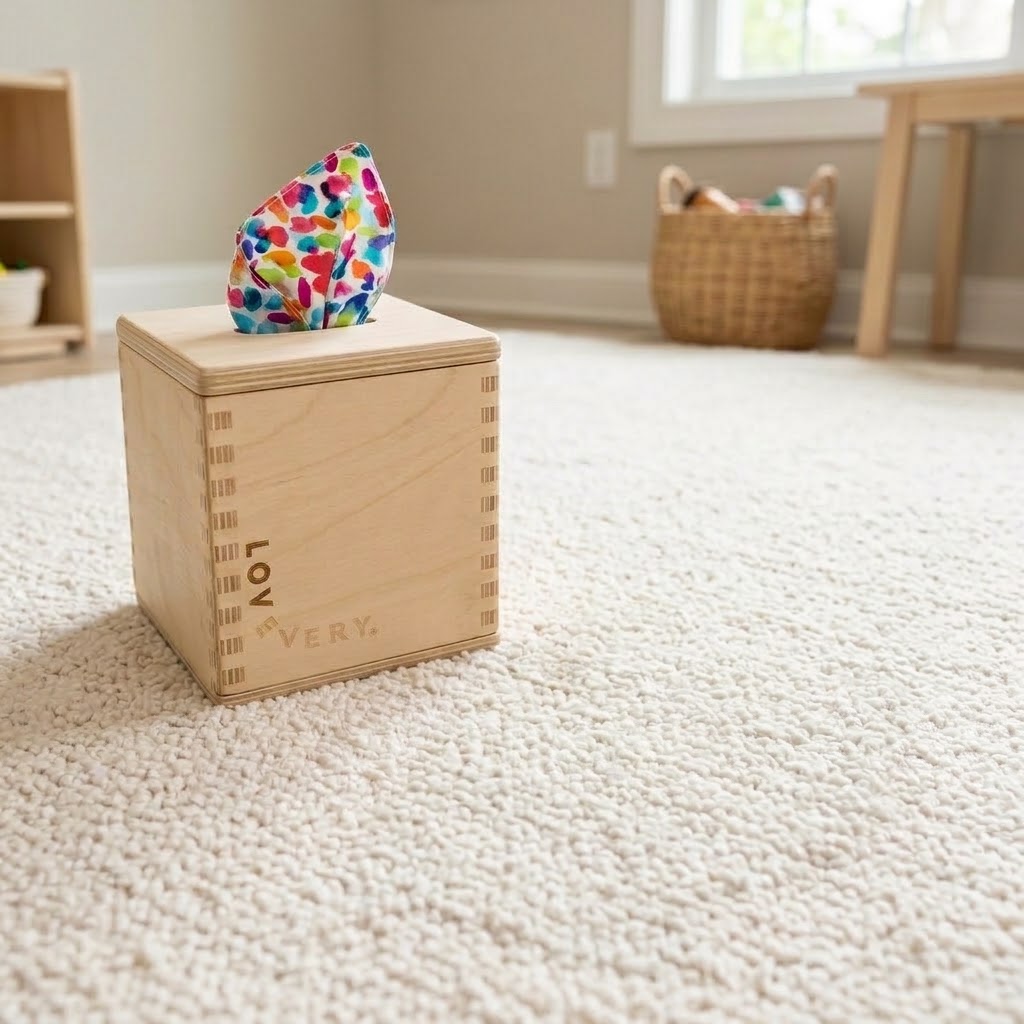
Lovevery Magic Tissue Box and Tissues
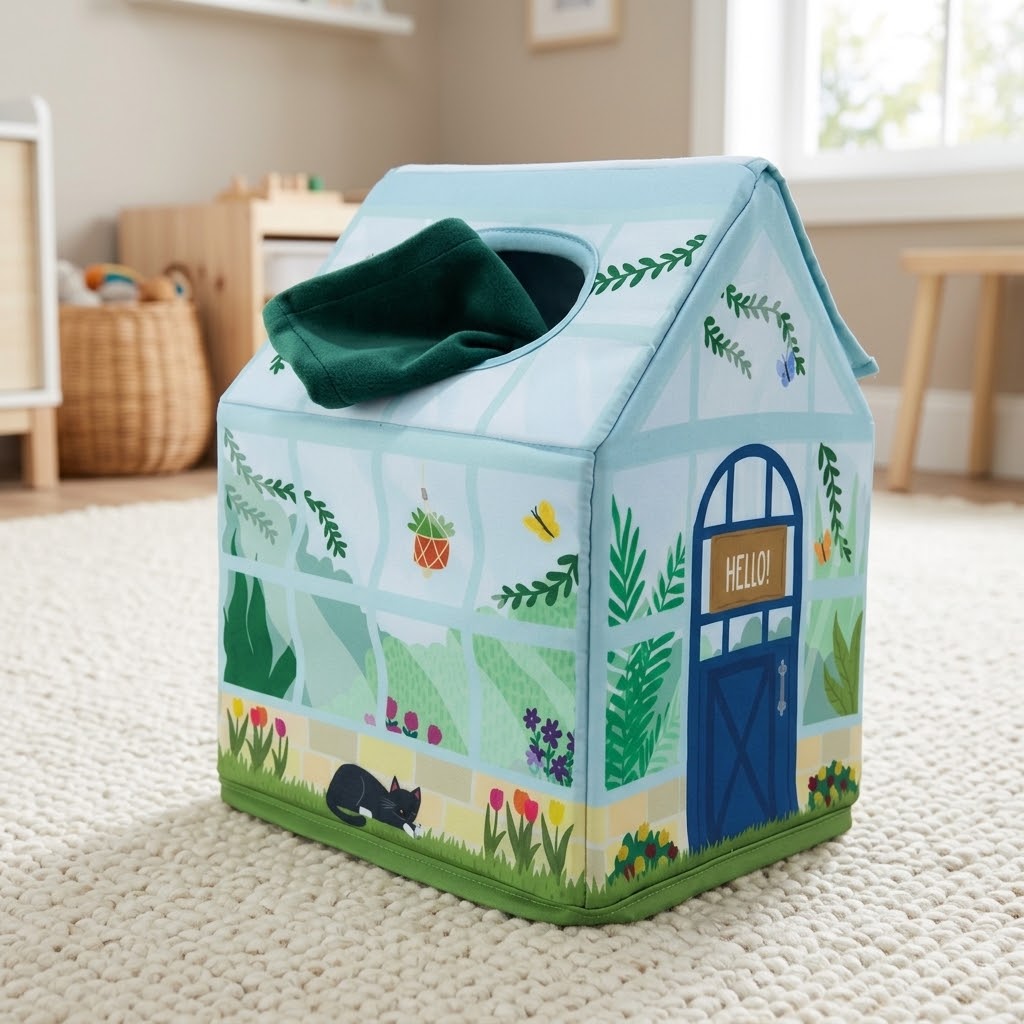
MindWare Sensory Sprouts Peek & Pull
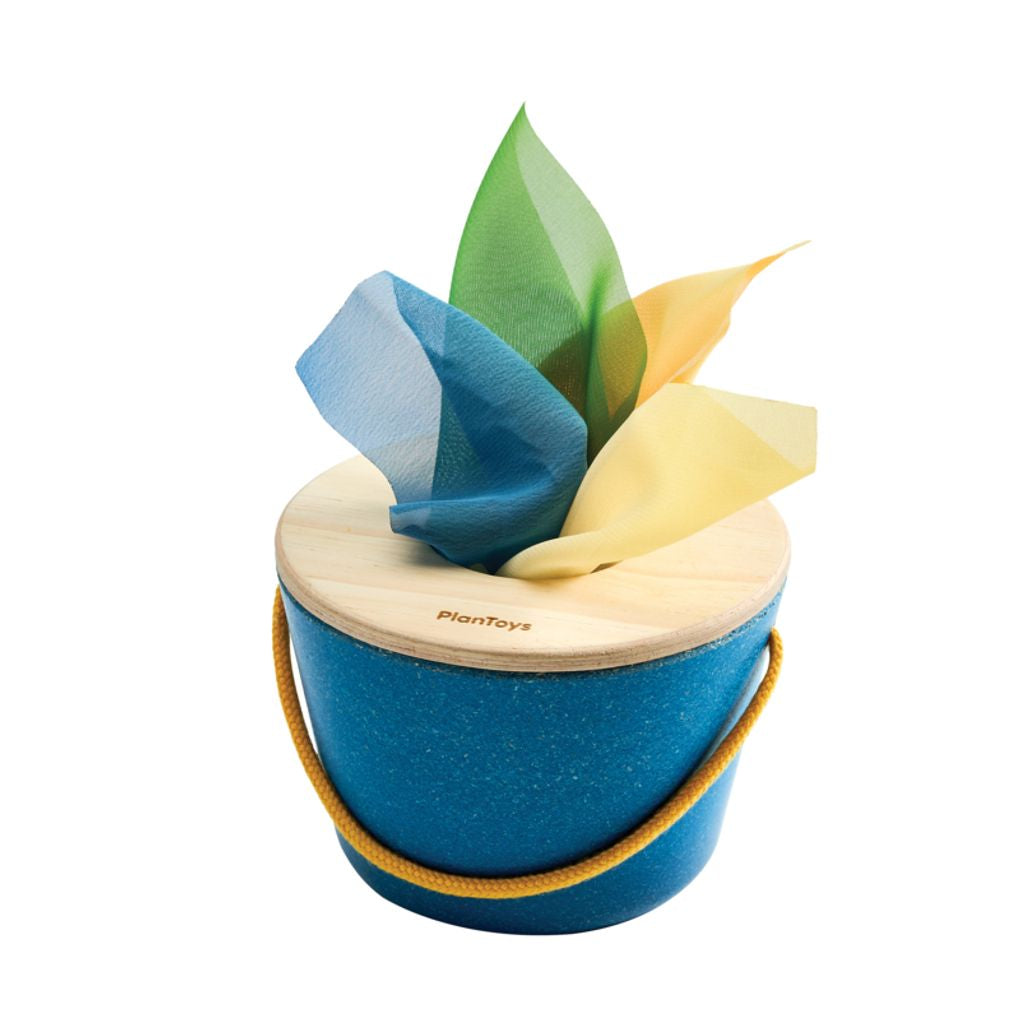
PlanToys Baby Tissue Box
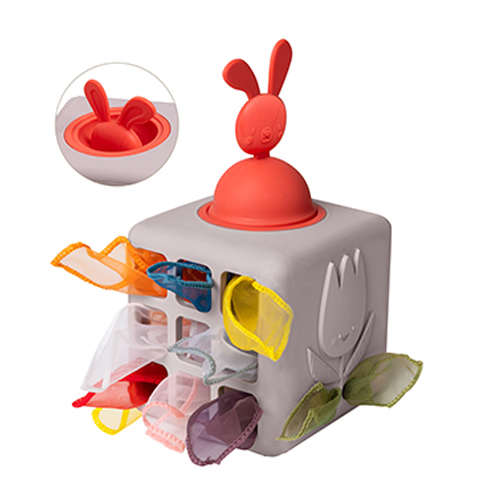
Taf Toys Pop Up Tissue Box
Prices checked October 21, 2026, before tax and shipping. Lovevery’s prices cover the whole kit. The Walmart offer is sold by Lily’s Home and fulfilled by Walmart. Ages follow manufacturer guidance.
Lovevery: the tissue train is the reason to buy it
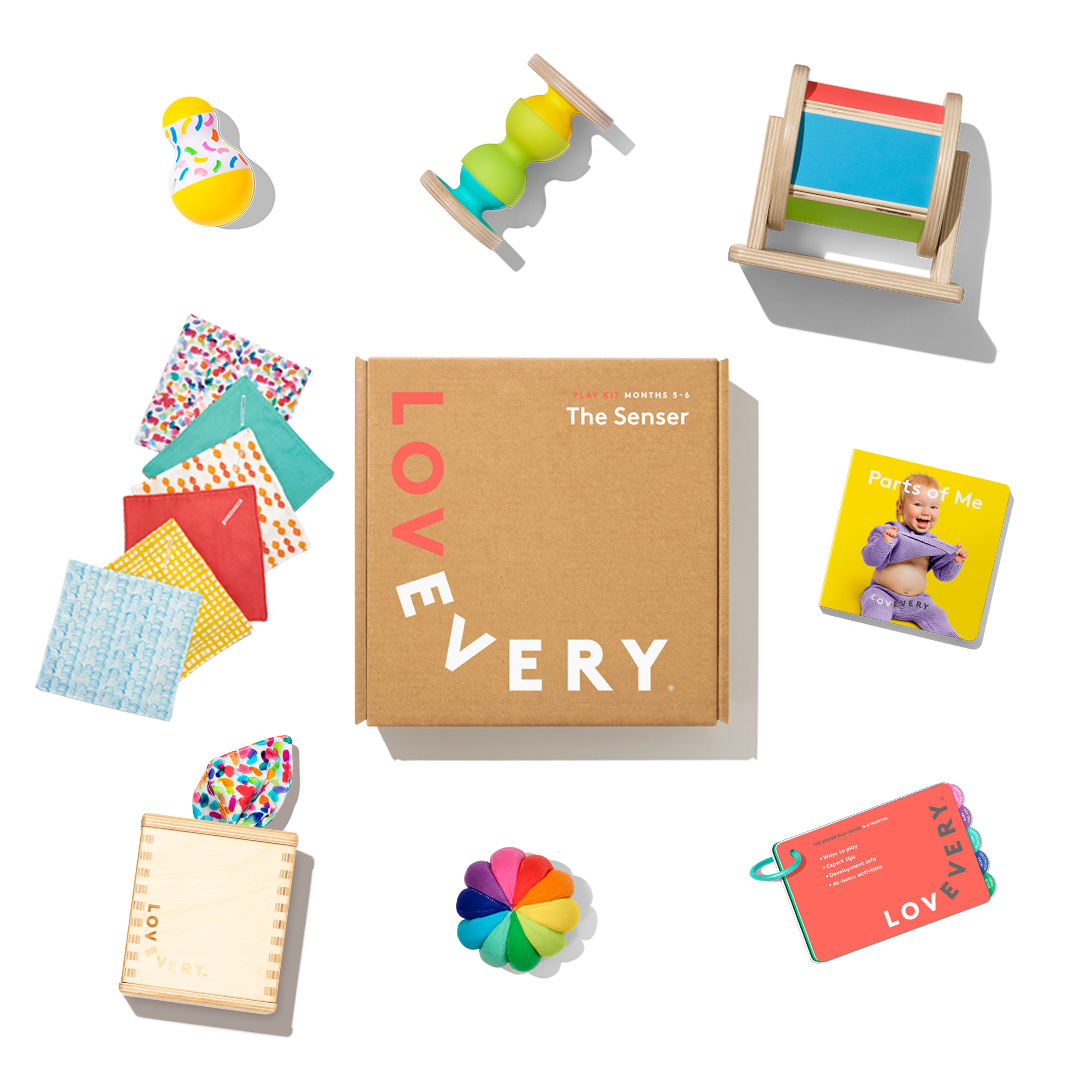
Lovevery’s Magic Tissue Box comes with The Senser Play Kit, $88 with a subscription or $104 as a single kit. Those prices include the other kit contents, not just this toy. View The Senser Kit.
The wooden box is appealing, but the tissues are the better argument for the original. Their corners link together, leaving another piece ready to grab after each pull. A loose-scarf box changes the game once the visible fabric disappears: now your baby has to reach inside and retrieve something. Lovevery preserves the rhythm of pulling one thing after another.
There’s parent work behind that smooth sequence. You connect the tissues, load them through the removable bottom, and reload when they’re out. The design keeps the next tissue available; it doesn’t eliminate resetting. Lovevery’s setup instructions.
Our take: Lovevery has the strongest design here for repeated tissue pulling. We’d buy The Senser Kit for a collection of complementary playthings, with this as one of its highlights. For this activity alone, we’d spend around $20–$28 on a standalone alternative.
Lovevery also lists a $25 replacement box, explicitly without tissues. That is not a complete standalone set and should not be compared with these ready-to-play alternatives.
MindWare Sensory Sprouts: our infant pick for sensory variety
The $27.99 Sensory Sprouts Peek & Pull pairs a soft container with scarves in different textures. It’s listed for 6 months and up. View at Target.
The fabrics are the reason we’d choose it. Pulling empties the box, but it doesn’t exhaust what you bought: the pieces still give your baby different surfaces to investigate. That makes a stronger sensory assortment than several colors of the same fabric.
It gives up Lovevery’s deliberately linked sequence. The emphasis shifts from keeping the next tissue ready to exploring and retrieving separate pieces. We’d accept that tradeoff for a standalone purchase.
Our take: Buy MindWare for an infant’s fabric-play toy. Compared with PlanToys, the extra roughly $6 goes toward variety in the contents, which is where we’d put the money for this kind of play.
PlanToys: our pick for a simpler wooden toy
The $21.99 PlanToys Baby Tissue Box includes a rubberwood bucket and four chiffon tissues, with an age recommendation of 6 months and up. View at Little Wonder & Co.
This is the clearest alternative for someone drawn to Lovevery’s wooden construction. You’re buying a defined container for pulling and putting things back, without paying for a larger collection.
Four chiffon tissues make a modest assortment. That’s its weakness beside MindWare: the fabrics provide less variety, and there’s no documented linking system to reproduce Lovevery’s tissue train. The value is in a straightforward wooden toy, rather than an extensive sensory bundle.
Our take: Buy PlanToys when you want the wooden container and a small, uncomplicated set. For exploring different fabrics, spend the extra on MindWare.
Taf Toys Pop Up Tissue Box: the best value from one year
The $19.99 Taf Toys Pop Up Tissue Box adds textured surfaces, a pull-through grid and a bunny that pops out and presses back in. Taf Toys recommends it from 12 months, so this is the toddler option in our comparison. Manufacturer details · View at Walmart.
Its best feature is that emptying the tissues doesn’t leave an inactive container. The cube itself supplies other things to manipulate, and its large refill opening makes putting the fabric back part of the play.
The variety comes mostly from the box’s activities; the included organza fabrics are a narrower texture selection than MindWare’s assortment. We’d choose it for a child moving between pulling, pressing and exploring surfaces, rather than for the closest imitation of Lovevery.
Our take: For a one-year-old, buy Taf Toys. At about $20, it gives the strongest combination of price and different activities in this shortlist.
Which would we buy?
For a baby from six months, we’d buy MindWare. Its varied fabrics make it our strongest standalone sensory purchase.
For a wooden toy, we’d buy PlanToys. It keeps the purchase simple and costs about $22.
From one year, we’d buy Taf Toys. Its activity surfaces give the box a purpose after the scarves are out.
We’d buy Lovevery for The Senser collection. Its tissue train is pretty slick, but we wouldn’t spend $88 solely to get it.
Comparing more of the collection? Our Lovevery alternatives guide covers ten popular toys and where we’d spend or save.